No articles found
We couldn't find any articles matching your search query. Try different keywords or check for spelling errors.
Antibiotic Resistance
What doesn’t kill you makes you stronger
Have you ever wondered why you have to finish every single pill in an antibiotic course, even if you feel better halfway through? Stopping early might feel harmless, but it contributes to the catastrophic emergence of “superbugs”.
What doesn’t kill you makes you stronger
Have you ever wondered why you have to finish every single pill in an antibiotic course, even if you feel better halfway through? Stopping early might feel harmless, but it contributes to the catastrophic emergence of “superbugs”.
Medical What doesn’t kill you makes you stronger Have you ever wondered why you have to finish every single pill in an antibiotic course, even if you feel better halfway through? Stopping early might feel harmless, but it contributes to the catastrophic emergence of “superbugs”. Bacteria primarily multiply through binary fission, a process where a cell replicates its DNA and splits into two identical clones. In contrast, they can also undergo horizontal gene transfer which allows bacteria to swap genetic material with their neighbours- even different species leading to rapid genetic variation which involves the plasmid. During DNA and plasmid replication, random mutations occur. By pure chance, a mutation might give a single bacterium the advantage to survive from an antibiotic. If the bacterium survives, it passes down its plasmid containing the resistant gene through binary fission or horizontal gene transfer. This creates a colony of bacteria resistant to the antibiotic. Completing a full course of antibiotic ensures even the most resilient bacteria are exposed to the drug long enough to die. Once the drug has wiped out the bulk of bacteria, your immune system can easily clean up the weakened remnants. This completely terminates the lineage, ensuring no survivors are left to pass on their resistant plasmids. Stopping an antibiotic early only kills off the weaker susceptible bacteria, leaving the stronger survivors with survival advantages or resistant genes. These bacteria multiply rapidly, creating a new colony that is entirely resistant to the previous drug rendering the previous antibiotics powerless. This makes future infections much difficult to treat, often requiring stronger medications with harsher side effects. Resolution of bacterial infections involves the interplay of completion of antibiotic course and a robust immune system. Completing the whole course of antibiotic gives your body the upper hand it needs to ensure that the infection today does not turn into an untreatable superbug tomorrow. Keywords Plasmids: Plasmids are small, circular loops of DNA separate from the main chromosome. It contains genes that control “bonus properties” such as antibiotic resistance, toxin production or the ability to break down rare sugars. Plasmids replicate independently and will be passed down to every new generation. Images References Cameranesi, M. M., Limansky, A. S., & Viale, A. M. (2020). Plasmid transfer by conjugation in gram-negative bacteria: From the cellular to the community level. Microbiology and Molecular Biology Reviews, 84(4). https://pmc.ncbi.nlm.nih.gov/articles/PMC7690428/ del Solar, G., Giraldo, R., Ruiz-Echevarría, M. J., Espinosa, M., & Díaz-Orejas, R. (1998). Replication and control of circular bacterial plasmids. Microbiology and Molecular Biology Reviews, 62(2), 434–464. https://pmc.ncbi.nlm.nih.gov/articles/PMC98921/ McQuillen, R., & Xiao, J. (2016). FtsZ and the division of prokaryotic cells and organelles. Nature Reviews Microbiology, 14(1), 42–51. https://pmc.ncbi.nlm.nih.gov/articles/PMC4757588/ Parihar, S., Gupta, S., & Singh, R. (2024). Revealing antibiotic resistance’s ancient roots: Insights from pristine ecosystems. Frontiers in Microbiology, 15, 1445155. https://doi.org/10.3389/fmicb.2024.1445155 Perry, J., Waglechner, N., & Wright, G. (2016). The prehistory of antibiotic resistance. Cold Spring Harbor Perspectives in Medicine, 6(6), a025197. https://pmc.ncbi.nlm.nih.gov/articles/PMC4888810/ Ritchie, H., & Roser, M. (2024). Antibiotics and antibiotic resistance. Our World in Data. https://ourworldindata.org/antibiotics Shintani, M., Sanchez, Z. K., & Kimbara, K. (2015). Genomics of microbial plasmids: Classification and identification based on replication and transfer systems. Frontiers in Microbiology, 6, 242. https://doi.org/10.3389/fmicb.2015.00242 Sultana, S., et al. (2026). Targeting horizontal gene transfer to combat antimicrobial resistance: A review of mechanisms, drivers, and multi-omics strategies. Infection and Drug Resistance, 19, 452–478. https://www.dovepress.com/targeting-horizontal-gene-transfer-to-combat-antimicrobial-resistance–peer-reviewed-fulltext-article-IDRBiosafety Levels
How do we handle the world most dangerous viruses?
Have you ever heard of biological hazard and wondered what it means? You have probably seen this sign somewhere, but what threat does it imply and how dangerous can it be?
How do we handle the world most dangerous viruses?
Have you ever heard of biological hazard and wondered what it means? You have probably seen this sign somewhere, but what threat does it imply and how dangerous can it be?
General How do we handle the world most dangerous viruses? Have you ever heard of biological hazard and wondered what it means? You have probably seen this sign somewhere, but what threat does it imply and how dangerous can it be? Biological hazard or biohazard is a biological substance that is harmful to human health, such as those that can cause infections, allergy and poisoning. In order to categorise the levels of biohazard in terms of the risk they pose, biosafety levels (aka BSL) are used and ranked 1 to 4. Level 1 being minimum risk and level 4 being extreme risk, and each level has specific controls for containment of biological substances. BSL-1 includes microbes that are non pathogenic, which do not cause disease in human. At this level the substances pose minimal hazard to human and the precautions are minimal. BSL-2 is for microbes that cause mild disease to human, such as bacteria and viruses that are pathogenic and infectious. More controls are needed to handle substances in BSL-2. BSL-3 is for working with microbes that can cause serious and fatal diseases through inhalation. Laboratory personnel is required to wear full protective clothing with respiratory protection for this level. BSL-4 is for the most dangerous substances such as those that are highly infectious, can cause fatal diseases and usually have no treatments or vaccines. The entrance to BSL-4 laboratory contains multiple showers, vacuum room, UV light room, autonomous detection system and other safety precautions. Exactly how much of a risk for different biosafety level you may ask? (Table for examples) For reference, HIV is classified as BSL-2 and the COVID-19 virus (SARS-CoV-2) is only classified as BSL-3! -tx- Biosafety-Level Example 1 Non-pathogenic strains of E.coli and Staphylococcus 2 Hepatitis A/B/C viruses, HIV, Salmonella, Toxoplasma Gondii 3 SARS-CoV-1, SARS-CoV-2, MERS-CoV, yellow fever virus, Mycobacterium tuberculosis 4 Marburg virus, Ebola virus, Variola virus, Lassa virus Keywords Images References Biological hazard - Wikipedia Biosafety level - Wikipedia (4) Understanding Biosafety Levels - YouTubeGraham's Number
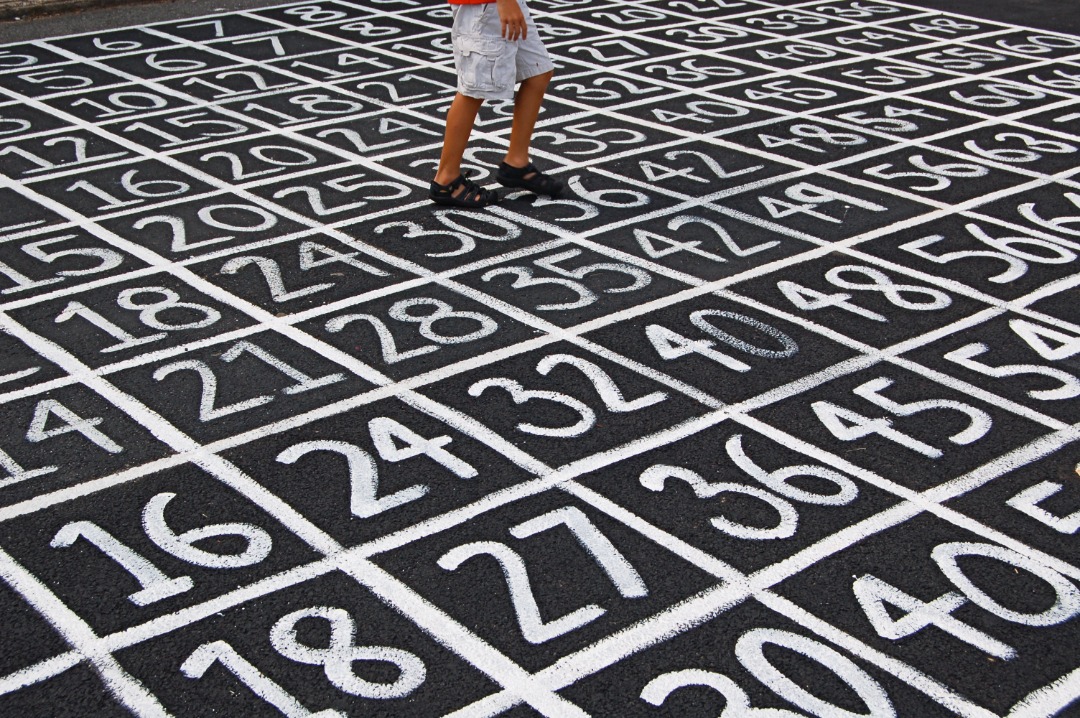
What is the largest number you can think of?
Have you ever wondered what is the largest finite number you can think of? No it is not 40 (largest number on earth in terms of surface area). It first seems like a meaningless question, because no matter how large a number is, you can always go higher. But now we are going to talk about one of the largest finite meaningful number, the Graham’s number.
What is the largest number you can think of?
Have you ever wondered what is the largest finite number you can think of? No it is not 40 (largest number on earth in terms of surface area). It first seems like a meaningless question, because no matter how large a number is, you can always go higher. But now we are going to talk about one of the largest finite meaningful number, the Graham’s number.
General What is the largest number you can think of? Have you ever wondered what is the largest finite number you can think of? No it is not 40 (largest number on earth in terms of surface area). It first seems like a meaningless question, because no matter how large a number is, you can always go higher. But now we are going to talk about one of the largest finite meaningful number, the Graham’s number. You have probably heard of a googol, which is 1 followed by a hundred 0s, it’s pretty big. Graham’s number is so big that it becomes super difficult to explain how big it is, so try your best to not get lost in the sea of numbers. For number as big as this, we need to talk about a new notation, the Knuth’s up-arrow notation (↑). The arrow notation utilises the idea of iterated operations. For example, multiplication is iterated addition, and exponentiation is iterated multiplication. From pic 2, we know that a 3↑3 denotes an exponentiation (3 multiply by itself 3 times). We can see from the pattern that adding one arrow indicates iteration of the previous operation, and the output increases massively. With just three arrows (3↑↑↑3), it gives a value with 3 million digits! In order to construct Graham’s number, we need to start with a number g1 (3↑↑↑↑3), which is already so big that we cannot possibly imagine. To continue with g2, we need a g1 number of arrows in 3↑…↑3. Then we use g2 for the number of arrows between two 3s to obtain g3, which is the number of arrow we needed for g4 .. (this process repeats 64 times) so on until we reach g64! Graham’s number was once in the Guinness Book of Records as the biggest number ever used in a constructive proof. Why would we need this insane number you ask? The number arose as an upper bound on an answer to a mathematical field on combinatorics. You can check out more online. It is amazing how mathematicians come up with such interesting number. If you try to picture the number, your brain would have so much information that it will instantly collapse into a black hole. Keywords Images ReferencesIndustrial Revolution

How are you seeing this post here..?
Have you ever wondered when and how the current technology that we are using now are born? What drives the birth of an advanced-technology world? Everything we do and utilised now, our almost every waking and sleeping second, all thanks to the industrial revolution.
How are you seeing this post here..?
Have you ever wondered when and how the current technology that we are using now are born? What drives the birth of an advanced-technology world? Everything we do and utilised now, our almost every waking and sleeping second, all thanks to the industrial revolution.
General How are you seeing this post here..? Have you ever wondered when and how the current technology that we are using now are born? What drives the birth of an advanced-technology world? Everything we do and utilised now, our almost every waking and sleeping second, all thanks to the industrial revolution. Part 1: The First Industrial Revolution In the 19th century, the industrial revolution was mainly confined to Great Britain. The first industrial revolution was important to mark the era of mechanisation. Before the industrial revolution, most of the world’s population engaged in farming. However, it was realised that the use of machine and new energy source were needed to increase the production. The first industrial revolution started when a new source of energy was found, steam. The first ever atmospheric steam engine was built that can be used to pump water from mines. Then, steam engines improved rapidly over the century, and were put into use for more power demanding applications, such as coalmines, textile mills and dozens of other heavy industries. Coal as one of the essential raw materials for many industries, there were more incentive to get more coal using steam engines in order to keep the coal mining cost cheap and time efficient. With cheap coals, it created the opportunity for everything from railroads and steels, so that mines transport was much more effective. The use of steam as energy source became one of the most important advancements that shaped the first industrial revolution in the 19th century, but also acted as a stepping stone for something more powerful.. Images Part 2: The Second Industrial Revolution Images Keywords References Part 1 Industrial Revolution | Definition, History, Dates, Summary, & Facts | Britannica Causes of the First Industrial Revolution: Examples & Summary - Video & Lesson Transcript | Study.com (43) Coal, Steam, and The Industrial Revolution: Crash Course World History #32 - YouTube (43) The First Industrial Revolution - YouTube Part 2Honey Bees
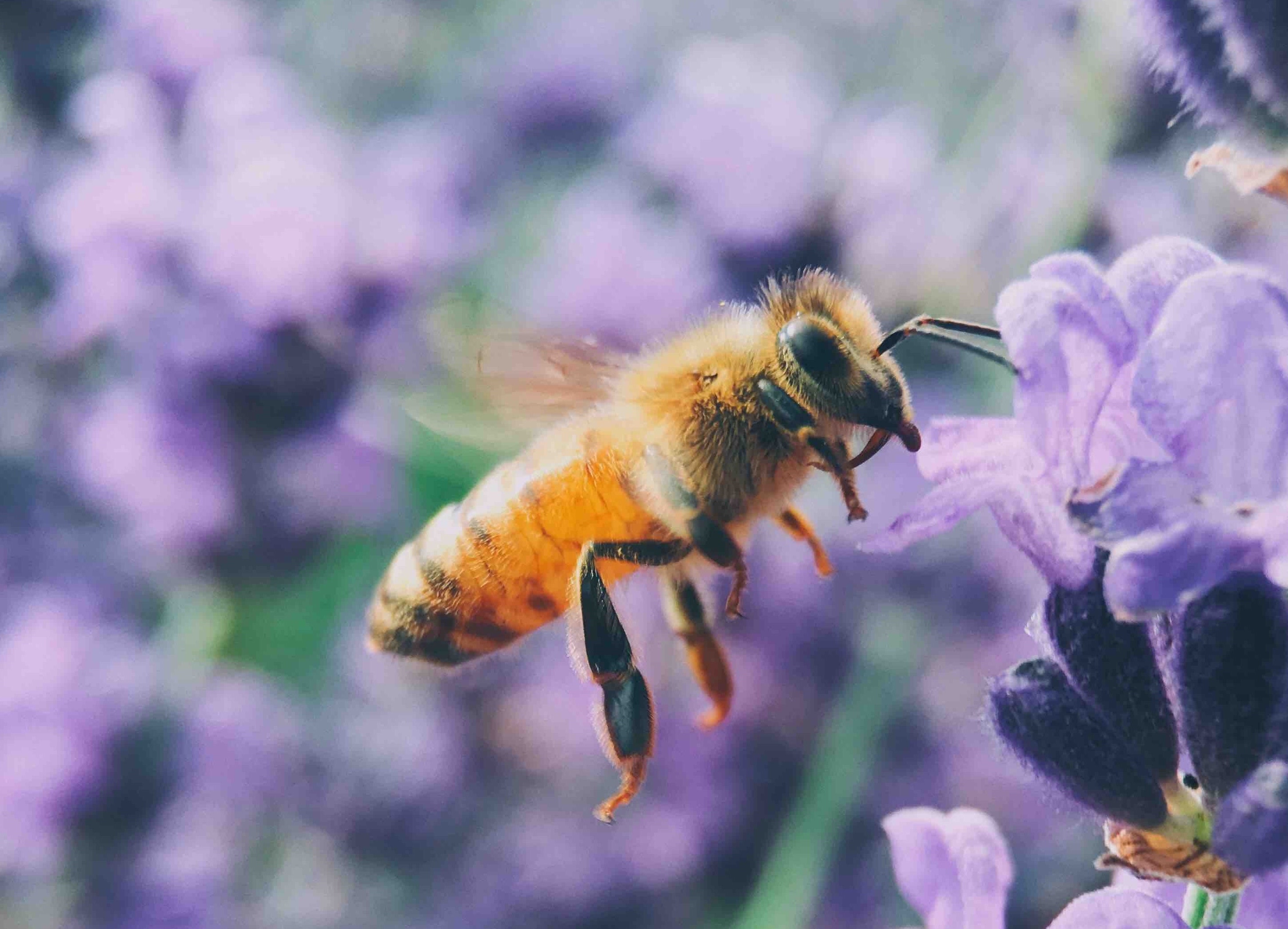
The wonders of nature… bees
Honey bees are one of the most collaborative insects in the world. Have you ever wondered how bees work together in such systematic way to sustain their colony? What are the roles and castes in honey bees?
The wonders of nature… bees
Honey bees are one of the most collaborative insects in the world. Have you ever wondered how bees work together in such systematic way to sustain their colony? What are the roles and castes in honey bees?
General The wonders of nature… bees Honey bees are one of the most collaborative insects in the world. Have you ever wondered how bees work together in such systematic way to sustain their colony? What are the roles and castes in honey bees? In the Selfish gene part 2, we mentioned that worker bees are sterile. But what are worker bees? A honey bee colony typically contains three types/castes of bees: queen, workers and drones and each of them have their own role. Queen bees are the largest bees and the heart of every colony. They are the only bees that are fertile, and are responsible for laying eggs to maintain the hive’s population. A queen bee has the ability to determine the gender of her children, to produce either drone (male) bees or worker (female) bees. The drone bees are the only male bees and make up around 1% of the population in a colony. Drone bees do not have stinger or any foraging tool, their only purpose is to mate with the queen and care for her. Mating with the queen is a suicidal mission for drone bees and they often get kicked out when there’s a food shortage. Here comes the female worker bees, they are the most numerous caste in a hive. As their name suggest, they carry out most of the chores, including foraging (looking for food/nectar), feeding the queen, cleaning the cell, guarding the hive, building the wax comp etc. The collaboration between the castes of the bees has made them the most successful organism in the nature! Keywords ReferencesN95
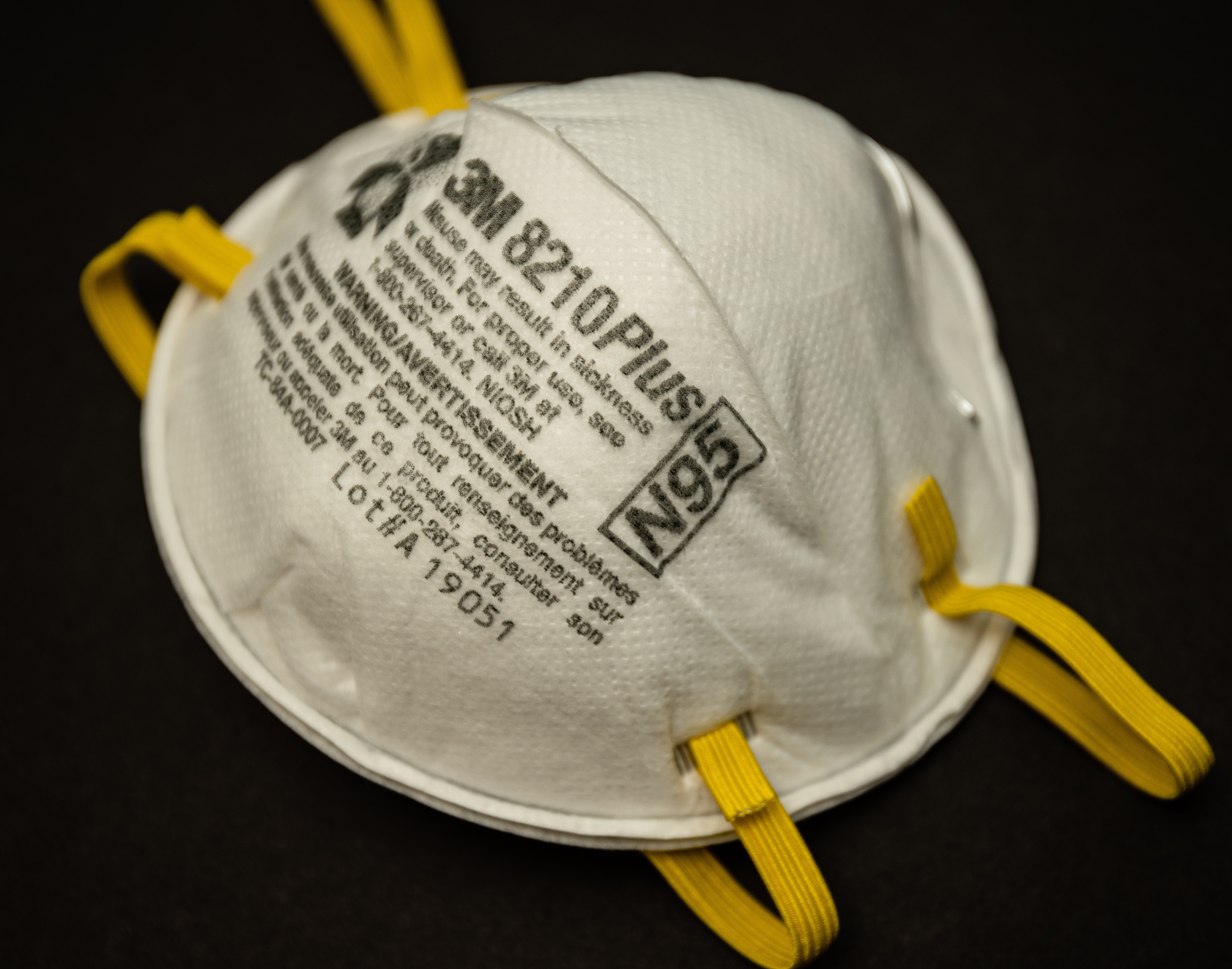
Masks.. an essential tool in the 2020s
One has seen the importance of masks to fight against diseases and the spread of viruses. Have you ever wondered how masks work, specifically the N95 masks? You might be thinking, all masks are like a mesh of fibers with gaps too small for dusts and other airborne particles to get through. But what’s so special about the N95 masks?
Masks.. an essential tool in the 2020s
One has seen the importance of masks to fight against diseases and the spread of viruses. Have you ever wondered how masks work, specifically the N95 masks? You might be thinking, all masks are like a mesh of fibers with gaps too small for dusts and other airborne particles to get through. But what’s so special about the N95 masks?
General Masks.. an essential tool in the 2020s One has seen the importance of masks to fight against diseases and the spread of viruses. Have you ever wondered how masks work, specifically the N95 masks? You might be thinking, all masks are like a mesh of fibers with gaps too small for dusts and other airborne particles to get through. But what’s so special about the N95 masks? Now a regular masks do filter out large particles, but a small enough particles are allowed to sneak through. N95 is much clever than that, it filters out tiny particles even though the particles are much smaller than the gaps between the fibers in the mask. First of all, the fibers in the N95 masks trap the airborne particles once the particles touch the fibers, so think of the fibers in N95 masks as a sticky spider web. To make sure that the fibers catch as much particles as possible, many layers of sticky fibers means more chances for particles to get stuck. How likely is the particles to get stuck depends on their size: large particles (often travel in straight line) will get trapped easily in their straight line path; tiny particles (travel in random zig-zag pattern known as Brownian Motion) also very likely can bump into a fiber. What’s difficult are the medium-size particles (carried by the air and flow around fibers), which can bypass and sneak through many fibers. N95 masks have another trick: the fibers are charged with static electricity, like a magnet (but for electricity). In the presence of electric field, even neutral particle can develop electrical imbalance which attracts them to the source of the field (attracts 10 times more particles than regular fibers). N95 does a really good job at capturing large and tiny particles (100%), as for medium-sized particles (95%), hence the name N95! Keywords Brownian Motion: A random motion of a particle as a result of collisions with surrounding gaseous molecules. Diffusiophoresis is the movement of a group of particles induced by a concentration gradient. This movement always flows from areas of high concentration to areas of low concentration. Electric Field: An electric field is the physical field that surrounds electrically charged particles and exerts force on all other charged particles in the field, either attracting or repelling them. Images References https://www.youtube.com/watch?v=eAdanPfQdCA https://www.sciencedirect.com/topics/chemistry/brownian-motion https://en.wikipedia.org/wiki/Electric_fieldSelfish Gene
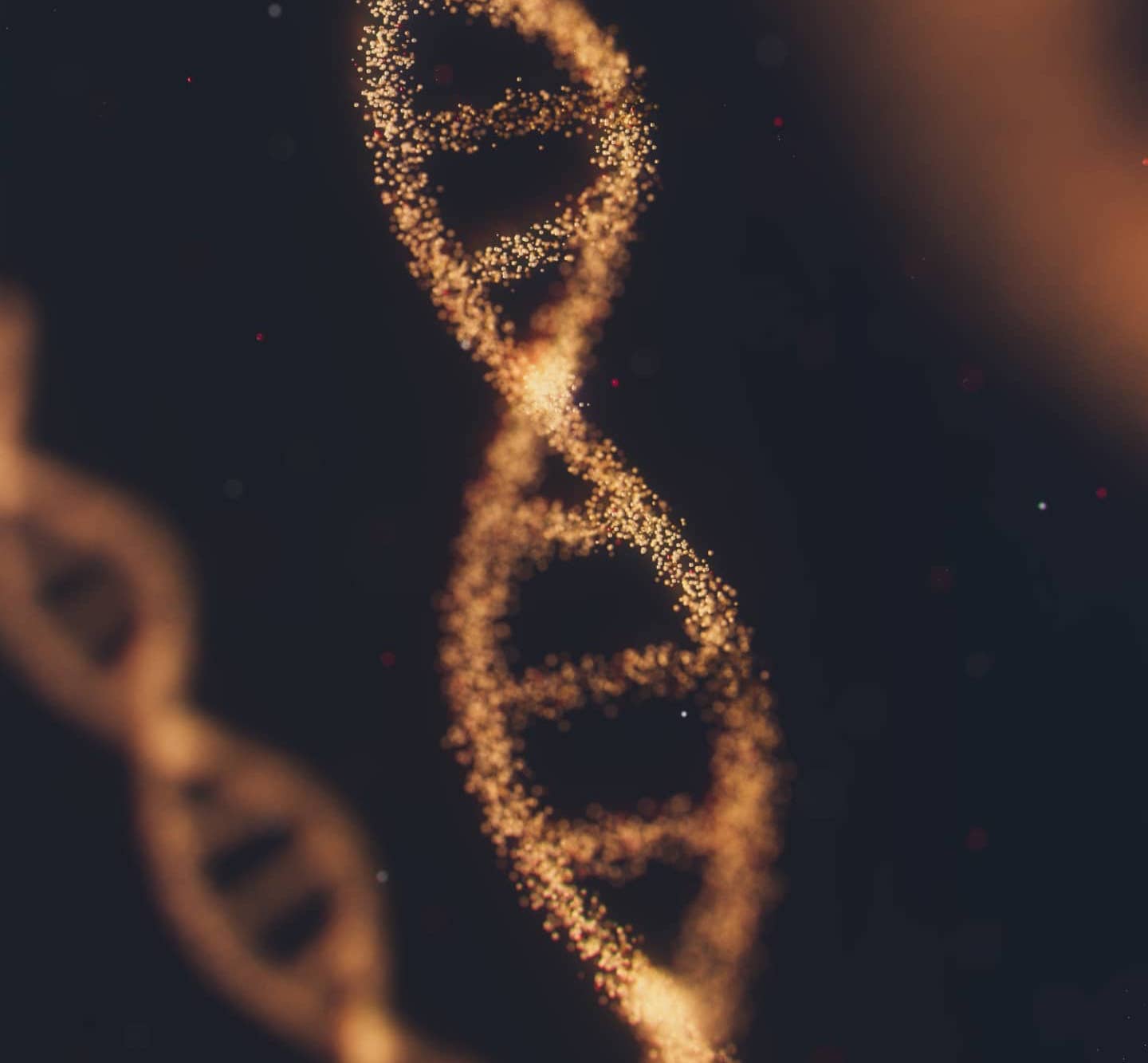
Every organism is selfish because of the gene..
Have you ever wondered about the origin of a species? Why are we all here? Where do we come from? The theory of evolution focus on how an organism compete for survival and how that competition shapes a species over multiple generation. If we look closely, the contest also plays out at a much finer level, level of the gene.
Every organism is selfish because of the gene..
Have you ever wondered about the origin of a species? Why are we all here? Where do we come from? The theory of evolution focus on how an organism compete for survival and how that competition shapes a species over multiple generation. If we look closely, the contest also plays out at a much finer level, level of the gene.
General Every organism is selfish because of the gene.. Have you ever wondered about the origin of a species? Why are we all here? Where do we come from? The theory of evolution focus on how an organism compete for survival and how that competition shapes a species over multiple generation. If we look closely, the contest also plays out at a much finer level, level of the gene. Disclaimer This post does not advocate any morality or social behaviour, it is purely an explanation from an idea I think is pretty interesting, so enjoy :) Part 1: Idea of Selfish Gene The theory of evolution by Charles Darwin is probably one of the most famous theory that explains how organisms evolve through the process of natural selection. Before going into the idea of the selfish gene, let’s get over some definitions. But what is gene? A gene is a stretch of chromosomal material that influences an organism’s trait, it can be copied or passed on to future generation. It is common to know that an offspring will contain a variety of traits (some from the mother, some from the father and unique ones caused by mutation). As a population of a species go out of space and/or food, they will automatically start to compete for survival (struggle of existence). Individual that happens to have a better traits for survival and reproduction tend to survive more often and have more offspring with similar traits. Any new mutation that potentially makes life easier in the environment, they will often be promoted and evolve. This is evolution by natural selection. Note that genes do not have minds or any self-conscious. Both genes that code for opposing traits are kinda a rivals in the struggle for existence. In the context of natural selection, it happens automatically that a gene that code for a certain trait has a definite advantage for survival than the other, the “weaker” gene will be eliminated. Being selfish in nature, ensures higher chances of survival. We, organisms of the world, are merely a house built by the gene for themselves. From the gene’s eye perspective, our function is to reproduce and make copies of the gene to be passed on to the next generation. The genes/copies of gene will live on indefinitely if we reproduce, even though we will eventually die. Images Part 2: Biological Altruism Not everyone is selfish, apparently In part 1 we discussed about the selfish gene. Being selfish in nature, ensures a higher chance of survival in the context of natural selections. However, you might have wondered that, some altruistic behaviour are easily observed in certain species, sometimes even sacrifice themselves for others. So how do these behaviour associates with being selfish in anyway? A very good explanation for these behaviour would be by using an examples. Honeybees’ stingers are covered in backward-facing barbs that, when attack, the stinger will be trapped in the intruders. If the bee tries to fly away, its internal organs will be ripped out and dies, so that the stinger stays and keeps pumping the venom. It does seem like a great defense for the bees, but how can this suicidal defense system evolve? One would suggest that a mutation that can make their body strong enough to hold their stinger in place for better at survival, right? In the gene’s eye perspective, in order for the genes to survive, the host can either reproduce, or protect the other organisms that share the same genes. What we know is that worker bees are sterile, so it makes perfect sense that the bee has to kill itself for the organisms that carry its gene. If a trait helps another host that carries the copy of your genes to survive and reproduce, teamwork is the best option. This is called indirect fitness. A suicidal stinger gene is shared by all or many of the bees, if one suicidal sting is so much more effective that it saves the lives of other bees, natural selection will favour that gene. Sometimes the best interests of a gene does not necessarily align with the best interests of the host. As Richard Dawkins puts it The death of a single sterile worker bee is no more serious to its gene, than is the shedding of a leaf in autumn to the genes of the tree. Images Part 3: Meme You’re more than your genes, you’re also made of memes.. The memes that we all love to see from the internet, have a biological meaning in terms of the selfish gene. So have you ever wondered what is a meme in the context of biological evolution and how does it relate to the gene? In the selfish gene, Richard Dawkins brought out the idea on not just the gene but the existence of a self-replicating unit of transmission (making copies of themselves). He proposed that human culture was composed at least in part of units that were like genes. This is what he called memes, a kind of replicator that behaves like genes in human culture, also acts as the unit of cultural inheritance. Very much like genes, memes survive, replicate and change through the evolution of culture like natural selection in biological evolution. Think of cultural entities as replicators, such as melodies, fashions and skills, they can be replicated through exposure of human. Memes do not get copied exactly, they can be combined, modified or refined to create new memes. Sounds familiar? It’s exactly like mutation in genes! Successful memes remains and replicate, whereas the unfit ones stall and are forgotten. The longer a meme stays in the host, the higher its chances of propagation are (retention). As human are mortal, memes need transmission, where they are copied from one person to another by communication or imitation. The act of copying an idea from one brain to another is equivalent to the act of reproduction at the genetic level. With the idea of memes, a field of study called memetics arose and have many useful and meaningful applications, such as in culture analysis, public relations and even computing Keywords Charles Darwin: Charles Darwin is best known for his contributions to evolutionary biology. His proposition that all species of life have descended from common ancestors is now widely accepted and considered a fundamental concept in science. Richard Dawkins: Richard Dawkins is a British evolutionary biologist and the author of some famous books such as The Selfish Gene and The God Delusion. He is an atheist, and he is well known for his criticism of creationism and intelligent design. Trait: A distinguishing and genetically determined characteristic, for example eye colour, skin tone etc. Mutation: Occurs when a DNA gene is damaged or changed in such a way as to alter the genetic message carried by that gene. This results in a variant form that may be transmitted to subsequent generations. Altruism: Disinterested and selfless concern for the well-being of others. Sterile: Not being able to produce any children or offspring. References Part 1 https://en.wikipedia.org/wiki/The_Selfish_Gene https://www.youtube.com/watch?v=KqdlBOoZsXo Part 2 https://plato.stanford.edu/entries/altruism-biological/ https://www.youtube.com/watch?v=6gE_IPTXznM Part 3 https://www.youtube.com/watch?v=5fG-3f4f0hA https://www.youtube.com/watch?v=4BVpEoQ4T2M&t=103s https://en.wikipedia.org/wiki/Meme https://en.wikipedia.org/wiki/MemeticsRainbow Part 2: Color of Light
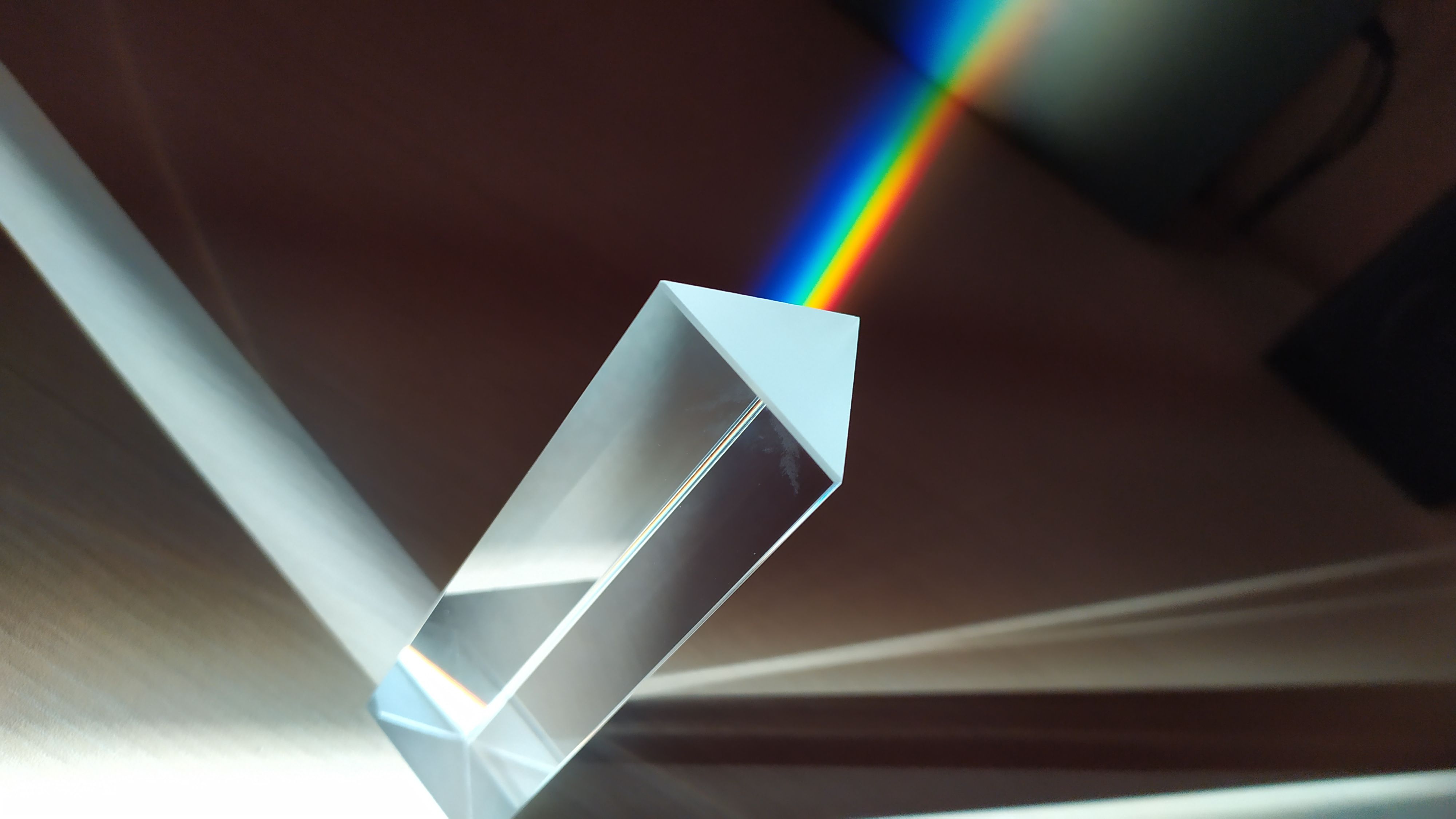
ROYGBIV
Have you ever wondered what the true colours of a rainbow are? Most of us learn that a rainbow consists of seven colours: red, orange, yellow, green, blue, indigo, and violet — or ROYGBIV for short. But if you look closely at a real spectrum, something seems odd..
ROYGBIV
Have you ever wondered what the true colours of a rainbow are? Most of us learn that a rainbow consists of seven colours: red, orange, yellow, green, blue, indigo, and violet — or ROYGBIV for short. But if you look closely at a real spectrum, something seems odd..
Nature ROYGBIV Have you ever wondered what the true colours of a rainbow are? Most of us learn that a rainbow consists of seven colours: red, orange, yellow, green, blue, indigo, and violet — or ROYGBIV for short. But if you look closely at a real spectrum, something seems odd.. We can recreate a rainbow using a glass prism. As white light passes through the prism, each colour bends by a slightly different amount, causing the light to spread out into a spectrum. But where exactly is the violet? And why do we often see a light blue colour between blue and green — what we would now call cyan — even though cyan does not appear in ROYGBIV? To answer this question, we need to go back to the origin of ROYGBIV. When Sir Isaac Newton performed his famous prism experiments, he divided the spectrum into seven colours: red, orange, yellow, green, blue, indigo, and violet. However, the colour names used in Newton’s time do not perfectly match how we classify colours today. In particular, Newton’s “blue” would appear closer to what we now call cyan, while his “indigo” occupied part of the range we often associate with modern blue. In reality, the visible spectrum is continuous rather than divided into distinct bands. The colours blend smoothly into one another, and the boundaries between them are largely defined by human perception. This brings us to another interesting question: where are purple, pink, and magenta? Unlike the colours found in a spectrum, purple and magenta are not associated with a single wavelength of light. Instead, they are produced when our brains perceive a combination of red and blue or violet light. Since red and violet appear at opposite ends of the spectrum, these colours do not normally appear in a rainbow produced by a prism. Yet sometimes observers report seeing purple or pinkish hues in natural rainbows. How is that possible? In Part 1, we learned that a rainbow is actually part of a circular pattern. Because light behaves as a wave, interference can occur as light passes through raindrops. Under the right conditions, this interference creates additional coloured bands just inside the primary rainbow. These are known as supernumerary rainbows. When these additional bands overlap with the colours of the primary rainbow, they can produce subtle purplish or pinkish hues that are not normally present in the primary spectrum. The result is an even more beautiful and complex display than the simple ROYGBIV pattern most of us learn in school. Roses are red, violets are blue, and purple is just a supernumerary hue. Keywords Isaac Newton: Sir Isaac Newton PRS was an English mathematician, physicist, astronomer, theologian, and author widely recognised as one of the greatest mathematicians and physicists of all time and among the most influential scientists. Sir Isaac Newton PRS was an English mathematician, physicist, astronomer, theologian, and author widely recognised as one of the greatest mathematicians and physicists of all time and among the most influential scientists. Interference: Interference of light is a common phenomenon that can be explained classically by the superposition or overlapping of the light waves. Images References Photo by Design Bits: https://www.pexels.com/photo/optical-glass-triangular-prism-3845161/ https://en.wikipedia.org/wiki/Isaac_Newton https://en.wikipedia.org/wiki/Wave_interference https://www.youtube.com/watch?v=9udYi7exojkRainbow Part 1: Formation
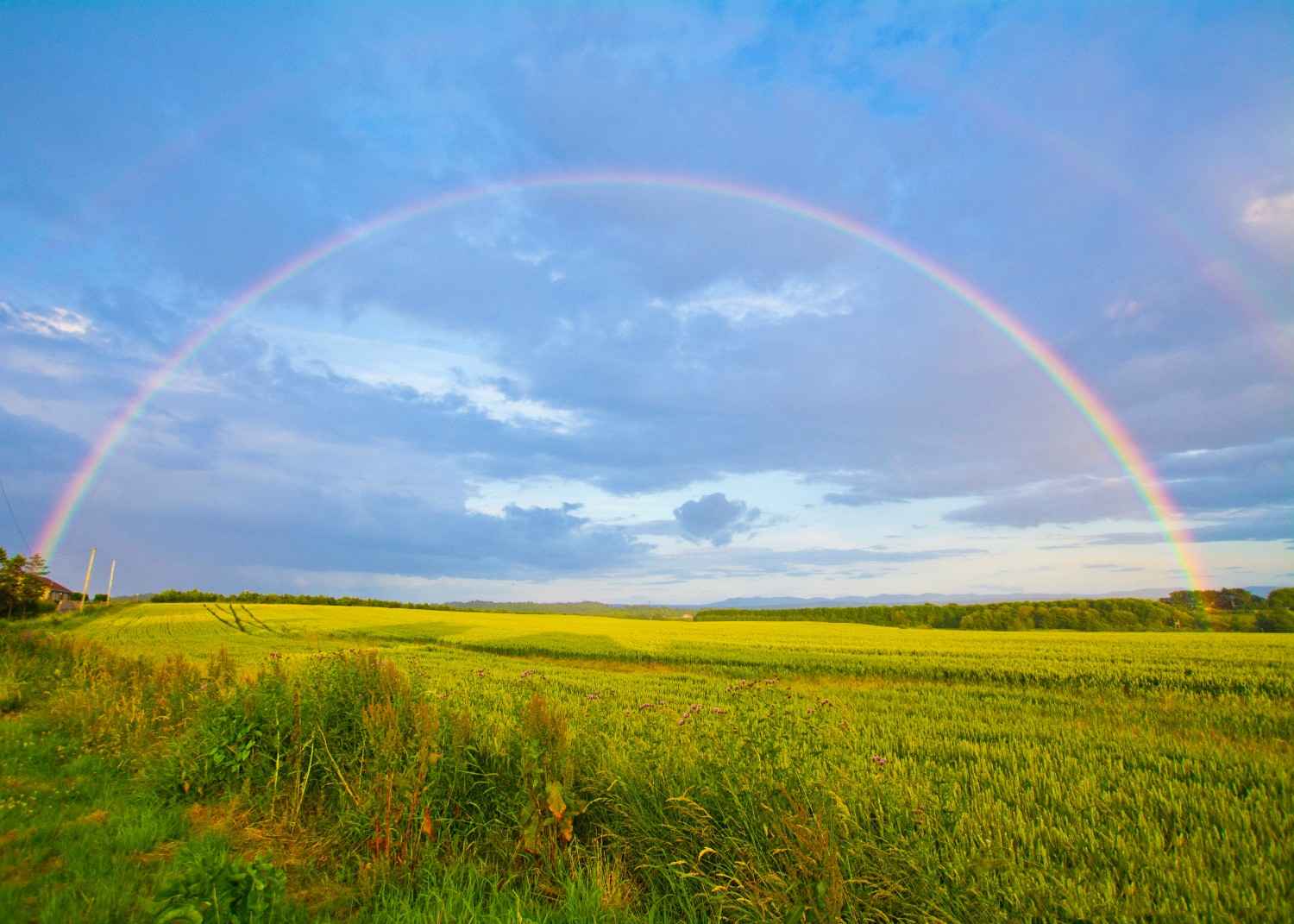
Chasing the end of a rainbow
Have you ever wondered what brings this beautiful combination of colors to the sky when the Sun shines after a rainfall? Let’s talk about one of nature’s most stunning phenomena: the rainbow!
Chasing the end of a rainbow
Have you ever wondered what brings this beautiful combination of colors to the sky when the Sun shines after a rainfall? Let’s talk about one of nature’s most stunning phenomena: the rainbow!
Nature Chasing the end of a rainbow Have you ever wondered what brings this beautiful combination of colors to the sky when the Sun shines after a rainfall? Let’s talk about one of nature’s most stunning phenomena: the rainbow! So what exactly is a rainbow? Why do we usually see it after the rain? And why does it always appear as an arc? First of all, a rainbow is not actually an arc, but a full circle. We usually see only part of it because the lower half lies below the horizon when we are standing on the ground. Under the right conditions, such as from an airplane, it is possible to see a complete circular rainbow. So how does a rainbow form? Like many beautiful natural phenomena, it all comes down to light. After a rainfall, countless tiny water droplets remain suspended in the air. When sunlight shines from behind you, the light enters these droplets and undergoes refraction, causing it to bend. The light then reflects off the inside of the droplet before exiting through the other side, where it is refracted once again. Because each color of light has a slightly different wavelength, each color bends by a slightly different amount. This causes the white sunlight to separate into its individual colors, producing the familiar spectrum of a rainbow. Perhaps the most fascinating fact is that the rainbow you see is unique to you. The colored light must reach your eyes from a very specific angle relative to the direction opposite the Sun, roughly 40° to 42°. When you move, the droplets responsible for the rainbow change as well. This is why you can never reach the end of a rainbow—the rainbow moves with you, continuously being formed by different droplets along your line of sight. Keywords Horizon: The line at which the earth’s surface and the sky appear to meet. Refraction: Refraction is the bending of light (it also happens with sound, water and other waves) as it passes from one transparent substance into another. This bending by refraction makes it possible for us to have lenses, magnifying glasses, prisms and rainbows. Reflection: Reflection is when light bounces off an object. If the surface is smooth and shiny, like glass, water or polished metal, the light will reflect at the same angle as it hit the surface. For a smooth surface, reflected light rays travel in the same direction. Images References Photo by Stainless Images on Unsplash https://www.nationalgeographic.org/encyclopedia/rainbow/ https://www.youtube.com/watch?v=5cVX3eq6NUQ https://www.sciencelearn.org.nz/resources/49-refraction-of-light https://www.sciencelearn.org.nz/resources/48-reflection-of-lightBlack Widow
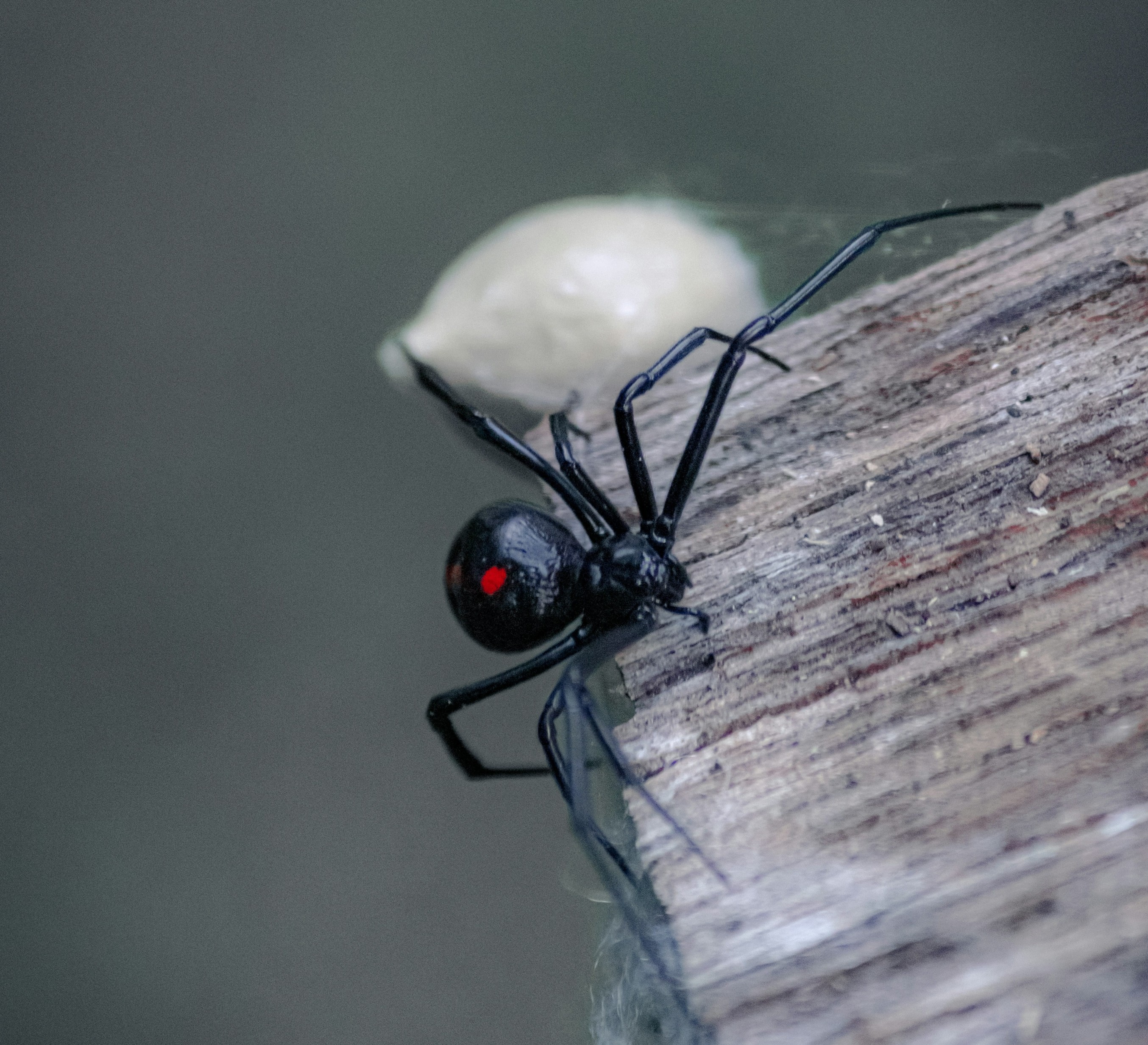
Another deadly romance story
It’s mating season, and male spiders are on the move looking for a mate… or are they? Have you ever wondered how black widow spiders mate, and why they are called “widows” in the first place?
Another deadly romance story
It’s mating season, and male spiders are on the move looking for a mate… or are they? Have you ever wondered how black widow spiders mate, and why they are called “widows” in the first place?
Nature Another deadly romance story It’s mating season, and male spiders are on the move looking for a mate… or are they? Have you ever wondered how black widow spiders mate, and why they are called “widows” in the first place? Female black widow spiders are significantly larger than males—sometimes many times heavier. As ambush predators, they use their webs to detect vibrations from anything that gets caught, including prey… or potential mates. When a male approaches a female’s web, he carefully produces specific vibrations to signal that he is not prey. This is often described as a kind of courtship “dance.” If the female is receptive, mating can occur. However, in some cases, the male may be attacked and eaten either during or after mating, similar to Praying Mantis. This behavior is known as sexual cannibalism, and it is observed in certain instances of the species Black widow spider, though it does not happen every time, hence the name “widow”. After mating, the female can store sperm for later fertilization, allowing her to produce multiple egg sacs over time. In some cases, mating may reduce the likelihood that the female will mate again soon, which could indirectly increase the male’s chances of passing on his paternal genes. This unusual behavior has made the black widow one of the most famous examples of extreme reproductive strategies in nature. A deadly romance—written by evolution. Keywords Sexual Cannibalism: when an animal, usually the female, cannibalizes its mate prior to, during, or after copulation. Images References Photo by Tom Sid on Unsplash Photo by Erik Karits: https://www.pexels.com/photo/macro-photography-of-spider-on-a-green-leaf-9816786/ https://en.wikipedia.org/wiki/Sexual_cannibalism https://www.youtube.com/watch?v=wcdKlgFOPsQPlacebo Effect
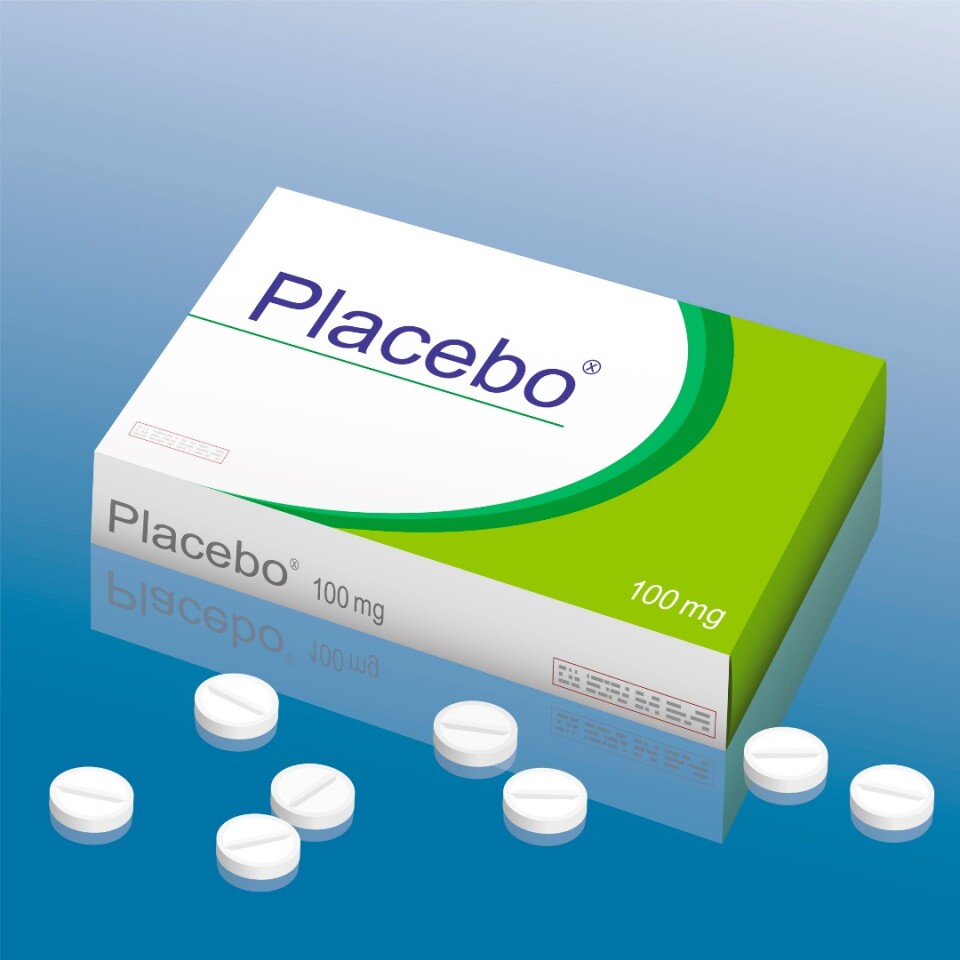
Belief is the key to success
Have you ever wondered can our power of belief change our body physically? A placebo is something that shouldn’t work, but due to our power of belief, does! In medical field, placebo can have a powerful influence on the body, in some cases can even help the body heals. How?
Belief is the key to success
Have you ever wondered can our power of belief change our body physically? A placebo is something that shouldn’t work, but due to our power of belief, does! In medical field, placebo can have a powerful influence on the body, in some cases can even help the body heals. How?
General Belief is the key to success Have you ever wondered can our power of belief change our body physically? A placebo is something that shouldn’t work, but due to our power of belief, does! In medical field, placebo can have a powerful influence on the body, in some cases can even help the body heals. How? In 1996, 56 volunteers took part in a study to test a new painkiller. One of the subject’s index finger is covered with this painkiller while the other index finger is remained untouched. Then both index fingers were squeezed with painful clamps. The subject then reported that the treated finger hurt less than the untreated one. That’s one effective painkiller there right? Except it’s not actually a painkiller, but a fake mixture with no pain easing properties at all. The answer lies within the placebo effect, an unexplained phenomenon wherein fake drugs or treatment that aren’t suppose to have an effect, but miraculously make people feel better, just because the subjects did not know it was fake, thus believing the painkiller had some effects. The more serious and potent the ‘fake’ treatment looks, the more effective it becomes, thanks to the power of the brain. If you’re reading this, you might think that the more you learn about placebos, and your lack of intrinsic power, the less effective they become right? No. Studies show that even if subjects know their treatment is a placebo, there will still be a positive effect and result. A placebo can’t fix everything, but one always has the power to start healing, if one believes in it. So always be positive about yourself! Keywords Images ReferencesFermi Paradox
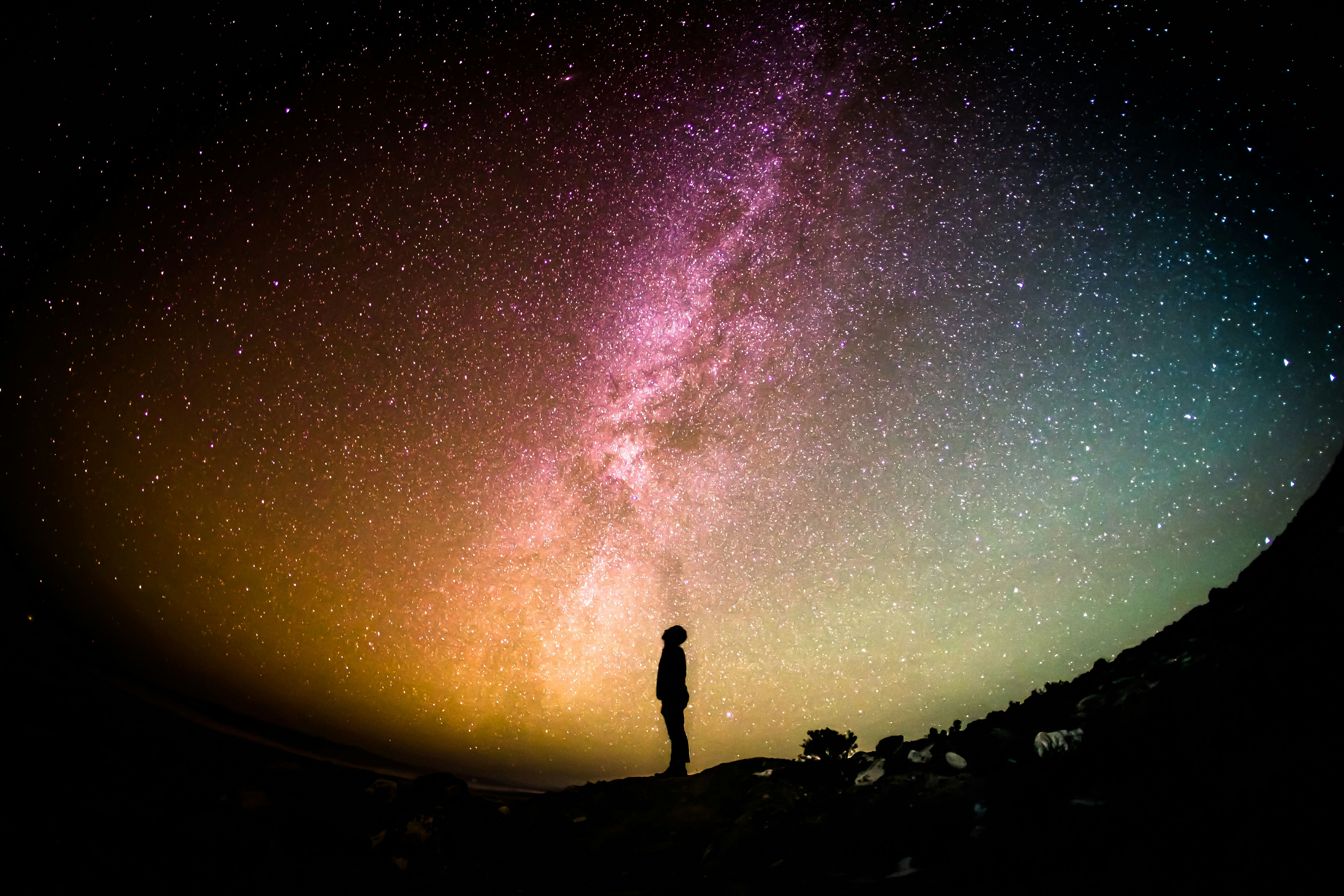
Are we alone?
Have you ever looked up at the night sky and wondered: are we alone in the universe? If intelligent extraterrestrial life is likely to exist, then why haven’t we found any evidence of it? The contradiction between the high probability of extraterrestrial civilizations and the lack of observational evidence is known as the Fermi Paradox.
Are we alone?
Have you ever looked up at the night sky and wondered: are we alone in the universe? If intelligent extraterrestrial life is likely to exist, then why haven’t we found any evidence of it? The contradiction between the high probability of extraterrestrial civilizations and the lack of observational evidence is known as the Fermi Paradox.
General Science Are we alone? Have you ever looked up at the night sky and wondered: are we alone in the universe? If intelligent extraterrestrial life is likely to exist, then why haven’t we found any evidence of it? The contradiction between the high probability of extraterrestrial civilizations and the lack of observational evidence is known as the Fermi Paradox. The Milky Way galaxy alone contains roughly 100 to 400 billion stars. Among them, billions may be Sun-like stars. Many of these stars are believed to host planets, and a fraction of those planets may lie within the so-called habitable zone, where conditions could allow liquid water to exist. Even with conservative estimates, this suggests an enormous number of potentially habitable worlds. Over the history of the Milky Way, which is billions of years older than Earth, there may have been countless opportunities for life to emerge and evolve. So where is everyone? There are many proposed explanations for the Fermi Paradox. One possibility is the Rare Earth hypothesis, which suggests that the combination of conditions required for complex life to evolve may be extremely unlikely. In this view, Earth may be an exceptional case, and intelligent life could be far rarer than we expect. Another possibility is that life exists, but we are simply not detecting it. We may not be using the right methods, or civilizations may be too far away for their signals to have reached us. A more unsettling idea is the Great Filter hypothesis, which suggests that somewhere along the path from simple life to advanced civilization, there is a stage that is extremely difficult to pass. Civilizations may commonly destroy themselves before becoming capable of interstellar communication. If this is true, it raises a difficult question: is the Great Filter behind us, or ahead of us? So what do you think? Are we alone, or just early? Fun Fact The name “Milky Way” comes from the appearance of our galaxy as a faint milky band across the sky. The term originates from the ancient Greek word galaxias, meaning “milky circle,” inspired by its hazy appearance when viewed from Earth. Keywords Milky Way Galaxy: The Milky Way is the galaxy that includes our Solar System, with the name describing the galaxy’s appearance from Earth: a hazy band of light seen in the night sky formed from stars that cannot be individually distinguished by the naked eye. Great Filter: The Great Filter, in the context of the Fermi paradox is whatever prevents non-living matter from undergoing abiogenesis (life arising from lifelessness) in time, to expanding lasting life Images References Photo by Greg Rakozy on Unsplash Photo by Danie Franco on Unsplash https://www.amnh.org/explore/ology/astronomy/the-milky-way-galaxy2 https://www.youtube.com/watch?v=sNhhvQGsMEc&t=287sStars Part 2: Death
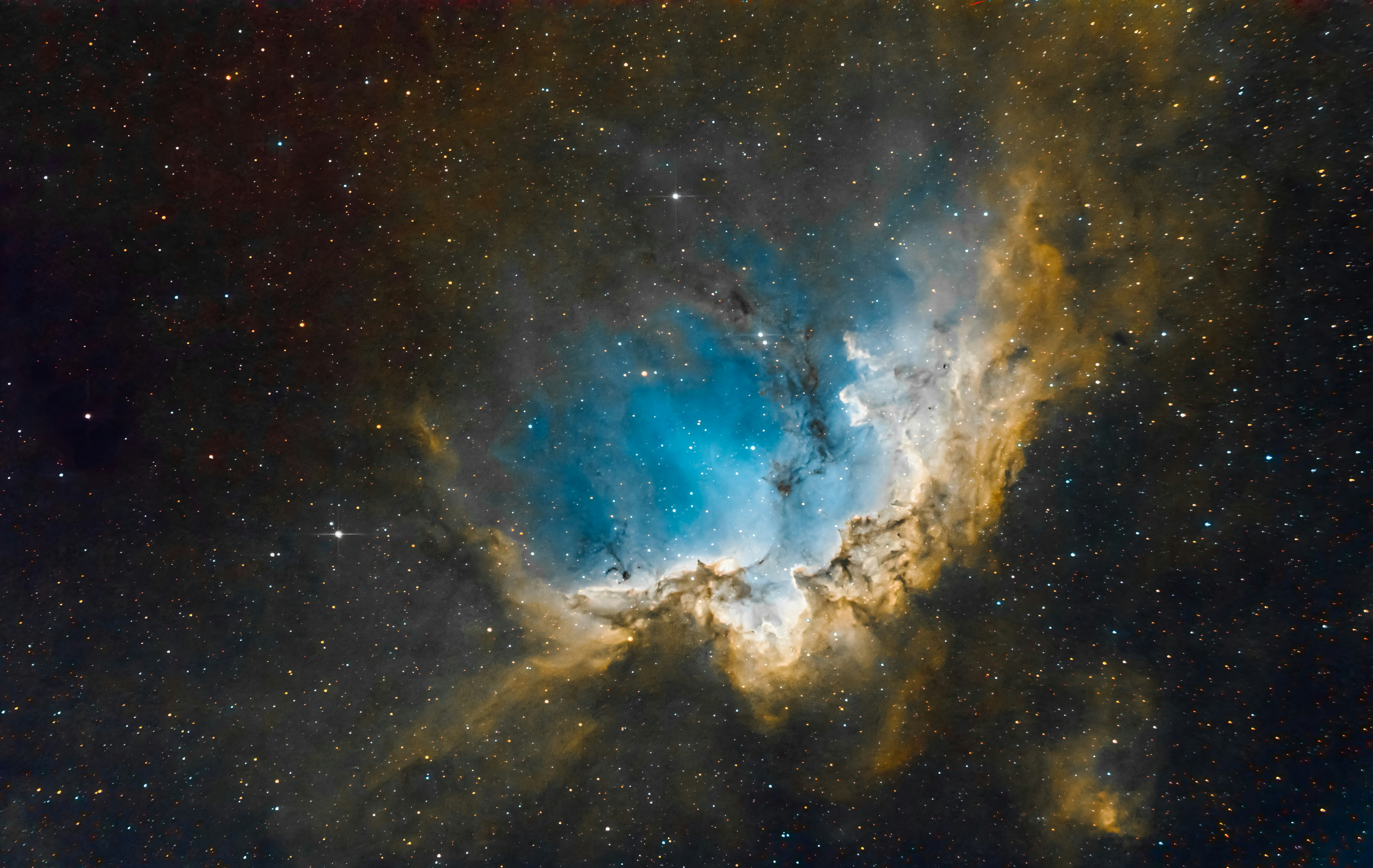
The death that creates life
When you look up at the night sky and admire the beautiful stars, have you ever wondered whether they have a lifespan? How long will they continue to shine? And perhaps more intriguingly, what happens when they die?
The death that creates life
When you look up at the night sky and admire the beautiful stars, have you ever wondered whether they have a lifespan? How long will they continue to shine? And perhaps more intriguingly, what happens when they die?
Physics The death that creates life When you look up at the night sky and admire the beautiful stars, have you ever wondered whether they have a lifespan? How long will they continue to shine? And perhaps more intriguingly, what happens when they die? Sadly, like all things in the universe, stars do not live forever. In Part 1, we learned that stars shine because of nuclear fusion, where hydrogen atoms fuse together to form helium. In more massive stars, fusion continues, producing heavier elements such as carbon, oxygen, and eventually iron under immense pressure and temperature. But this process cannot continue forever. Once the star runs out of fuel, it can no longer produce enough energy to resist its own gravity. The delicate balance between the outward pressure from fusion and the inward pull of gravity is broken, causing the core to collapse. For an average-sized star like our Sun, the star expands into a red giant. Eventually, it sheds its outer layers into space, creating a beautiful planetary nebula, while the remaining hot core becomes a white dwarf. Over billions of years, this white dwarf slowly cools and fades. Things become even more dramatic for massive stars. After building up an iron core, fusion can no longer produce energy. The core suddenly collapses under its own gravity before violently rebounding in one of the most powerful explosions in the universe—a supernova. This explosion scatters heavy elements throughout space, providing the raw materials for future stars, planets, and even life itself. What remains depends on the mass of the collapsed core. If it is sufficiently massive, it becomes an incredibly dense neutron star. If it is even more massive, gravity overwhelms every known force and the core collapses into a black hole. In a way, every atom of carbon in our bodies, every oxygen molecule we breathe, and even the iron in our blood was forged inside a star long before the Earth existed. We are made of stardust. Keywords Planetary Nebula: A planetary nebula is created when a star blows off its outer layers after it has run out of fuel to burn. These outer layers of gas expand into space, forming a nebula which is often the shape of a ring or bubble. Supernova: A supernova is a powerful and luminous stellar explosion. This transient astronomical event occurs during the last evolutionary stages of a massive star Images References Photo by arnaud girault on Unsplash Photo by Alexandre P. Junior: https://www.pexels.com/photo/orion-illuminating-starry-sky-7736065/ Photo by Aman Pal on Unsplash https://www.youtube.com/watch?v=e-P5IFTqB98 https://www.youtube.com/watch?v=3pAnRKD4raY https://coolcosmos.ipac.caltech.edu/ask/225-What-is-a-planetary-nebula- https://en.wikipedia.org/wiki/SupernovaStars Part 1: Formation
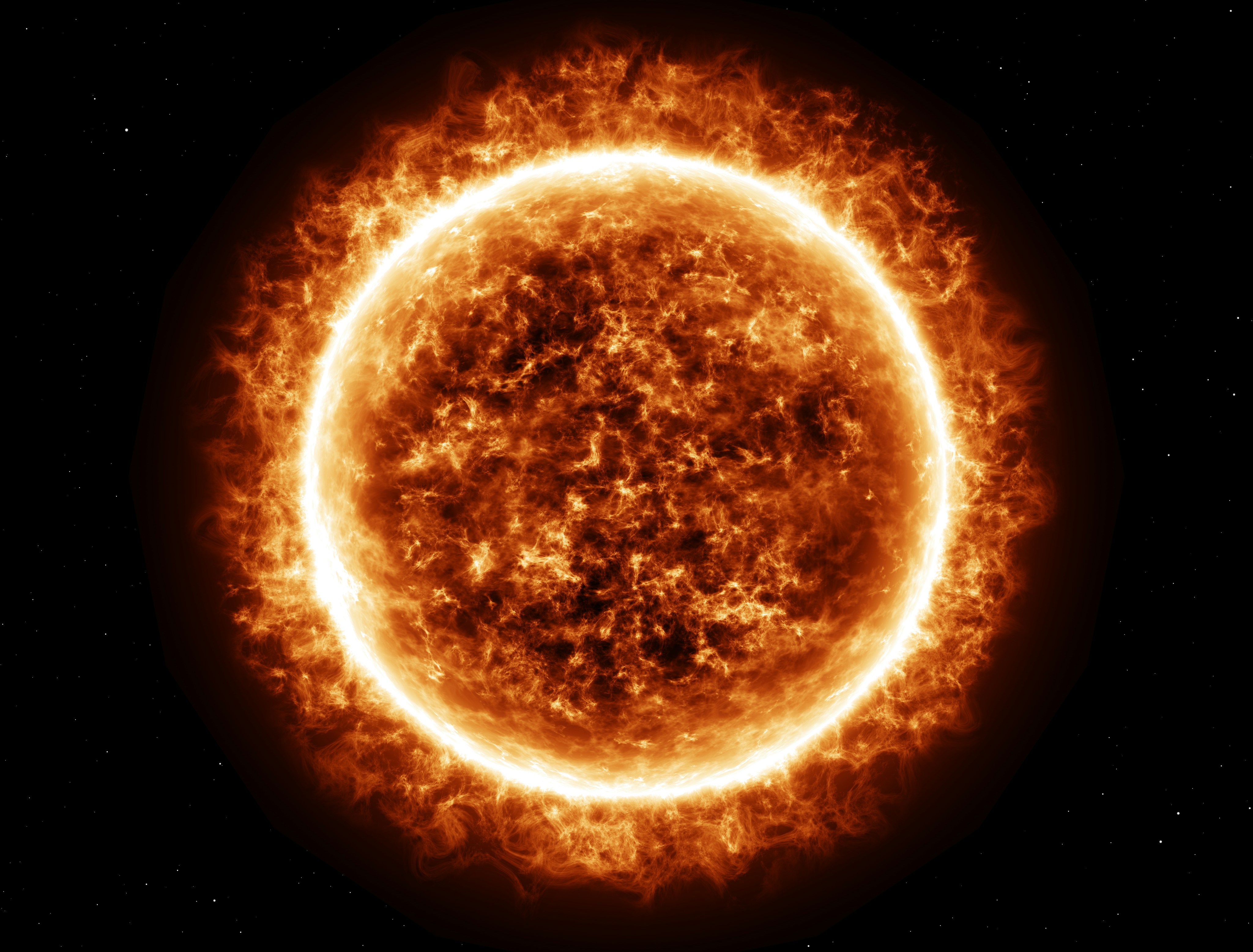
Gravity gave birth to the stars
Have you ever wondered how stars are formed? Why do they twinkle? There are an estimated 100 to 400 billion stars in our galaxy alone, and some are thousands of times larger than our Sun!
Gravity gave birth to the stars
Have you ever wondered how stars are formed? Why do they twinkle? There are an estimated 100 to 400 billion stars in our galaxy alone, and some are thousands of times larger than our Sun!
Physics Gravity gave birth to the stars Have you ever wondered how stars are formed? Why do they twinkle? There are an estimated 100 to 400 billion stars in our galaxy alone, and some are thousands of times larger than our Sun! First of all, what exactly is a star? A star is a massive celestial body that produces its own light and heat. Our Sun, for example, is the closest star to Earth. But how are these brilliant objects born in the vastness of space? Stars begin their lives inside enormous clouds of gas and dust known as nebulae, composed mostly of hydrogen. Over time, gravity causes parts of these clouds to collapse inward. As more and more gas is pulled together, the cloud becomes denser and hotter, eventually forming what is known as a protostar. When the temperature and pressure at the core become high enough, hydrogen atoms begin to fuse together to form helium. This process, known as nuclear fusion, releases an enormous amount of energy in the form of heat and light. The energy produced by fusion pushes outward, while gravity continues pulling inward. As long as these two forces remain in balance, the star stays stable. Depending on its mass, a star can continue shining for millions to billions of years! Not all stars are the same. Their surface temperatures determine their colours. Surprisingly, red stars are the coolest, while blue stars are the hottest. Only in the darkness can you see the stars. Keywords Protostar: A protostar is a very young star that is still gathering mass from its parent molecular cloud. The protostellar phase is the earliest one in the process of stellar evolution. For a low-mass star (i.e. that of the Sun or lower), it lasts about 500,000 years. Nuclear Fusion: In a fusion reaction, two light nuclei merge to form a single heavier nucleus. The process releases energy because the total mass of the resulting single nucleus is less than the mass of the two original nuclei. The leftover mass becomes energy. Images References Photo by Javier Miranda on Unsplash Photo by Alexander Andrews on Unsplash https://www.youtube.com/watch?v=e-P5IFTqB98 https://en.wikipedia.org/wiki/Protostar https://www.energy.gov/science/doe-explainsnuclear-fusion-reactionsGrandfather Paradox
Let’s travel back in time
Have you ever wondered whether we could travel back in time? In the Special Relativity series, we learned that travelling close to the speed of light can, in a sense, allow you to travel into the future through time dilation. But what about travelling into the past?
Let’s travel back in time
Have you ever wondered whether we could travel back in time? In the Special Relativity series, we learned that travelling close to the speed of light can, in a sense, allow you to travel into the future through time dilation. But what about travelling into the past?
Physics Let’s travel back in time Have you ever wondered whether we could travel back in time? In the Special Relativity series, we learned that travelling close to the speed of light can, in a sense, allow you to travel into the future through time dilation. But what about travelling into the past? One of the biggest challenges with backward time travel is the famous grandfather paradox. Imagine you invent a time machine and travel back to a time when your grandfather was still a child. What if you killed him before he had children? Then one of your parents would never have been born, which means you would never have existed. But if you were never born, who went back in time to kill your grandfather? This logical contradiction suggests that travelling into the past may not be as simple as science fiction often portrays. One proposed solution is the Novikov self-consistency principle. It states that any event which would create a paradox has a probability of zero. In other words, if you already exist, then history must remain self-consistent. You may travel to the past, but you would never be able to kill your grandfather—or perform any action that would alter events in a way that creates a contradiction. Somehow, circumstances would always prevent the paradox from happening. So… what happened, happened? That sounds a little boring. Another fascinating idea comes from the many-worlds interpretation, often associated with the concept of parallel universes. Under this idea, travelling back in time would not send you into your own past, but into the past of a different branch of reality. You could kill your grandfather in that universe without affecting your own history, because the universe you left remains unchanged. Your grandfather would still be alive in your original timeline, while a different timeline would unfold from the moment you arrived. So which explanation is correct? At the moment, no one knows. Both ideas remain theoretical, and we have no experimental evidence that travelling to the past is possible. But if it ever becomes reality, the universe may have already found a way to avoid its own paradoxes. Perhaps history cannot be changed—only revisited. Keywords Closed Loop: An automatic control system in which an operation, process, or mechanism is regulated by feedback. Parallel Universe: A parallel universe, also known as a parallel dimension, alternate universe, or alternate reality, is a hypothetical self-contained plane of existence, co-existing with one’s own. The sum of all potential parallel universes that constitute reality is often called a “multiverse”. Images References https://en.wikipedia.org/wiki/Parallel_universes_in_fiction https://www.space.com/grandfather-paradox.html https://www.youtube.com/watch?v=XayNKY944lY https://en.wikipedia.org/wiki/Novikov_self-consistency_principleShape of Gravity
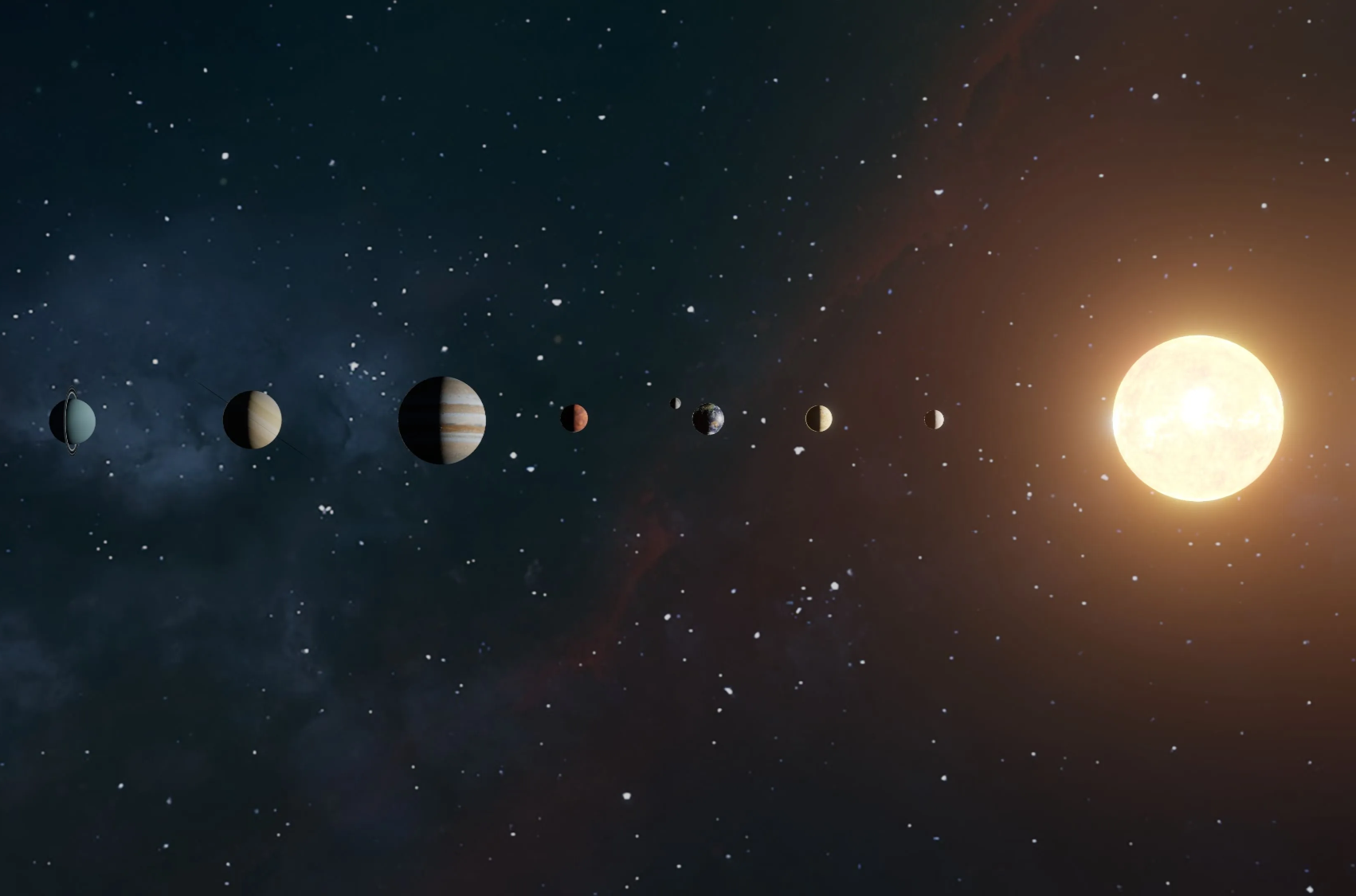
Every planet wants to become a sphere
Have you ever wondered why the Earth is round? Why are almost everything in space—planets and stars—round as well? Why isn’t the Earth flat? And if the Earth is round, why don’t people at the “bottom” fall off?
Every planet wants to become a sphere
Have you ever wondered why the Earth is round? Why are almost everything in space—planets and stars—round as well? Why isn’t the Earth flat? And if the Earth is round, why don’t people at the “bottom” fall off?
Physics Every planet wants to become a sphere Have you ever wondered why the Earth is round? Why are almost everything in space—planets and stars—round as well? Why isn’t the Earth flat? And if the Earth is round, why don’t people at the “bottom” fall off? The answer is gravity. Gravity is one of the **four fundamental forces **of nature. It is well described by Sir Isaac Newton’s law of gravitation and later refined by Albert Einstein’s general theory of relativity. Newton discovered that every object with mass attracts every other object with mass. The strength of this attraction is directly proportional to the masses of the objects and inversely proportional to the square of the distance between them. For everyday objects, this gravitational force is incredibly tiny—that’s why you and I are not noticeably attracted to each other. But for an object as massive as the Earth, gravity becomes overwhelmingly strong. The feeling of gravity is simply the Earth and you attracting one another. Every tiny part of the Earth pulls on every tiny part of you, and vice versa. The combined effect of all these tiny gravitational pulls is a force directed toward the Earth’s center of mass. As a planet forms, gravity pulls its material inward from every direction. Mountains may collapse, valleys may fill, and matter gradually flows toward a shape where gravity is balanced in all directions. The result is a sphere—the most stable shape a large object can naturally form under its own gravity. (More precisely, the Earth is an oblate spheroid, meaning it is slightly flattened at the poles because of its rotation.) You could imagine creating a planet shaped like a cube or a flat disk. But if gravity were allowed to act over millions of years, the object would gradually collapse and reshape itself into something very close to a sphere! Gravity doesn't care what shape you begin with—it always pulls you toward a sphere. Keywords 4 Fundamental Forces: There are four fundamental forces at work in the universe: the strong force, the weak force, the electromagnetic force, and the gravitational force. They work over different ranges and have different strengths. Gravity is the weakest but it has an infinite range. Directly Proportional: The relationship between 2 quantities where one quantity increases or decreases constantly with respect with another quantity. Inversely Proportional: The relationship between 2 quantities where one quantity increases with respect to a decrease in another or vice versa. Images References Photo by Zelch Csaba: https://www.pexels.com/photo/a-solar-system-graphic-12491599/ https://home.cern/science/physics/standard-model https://www.youtube.com/watch?v=Xc4xYacTu-E https://www.youtube.com/watch?v=VNqNnUJVcVsMorse Code
SOS: The message that means nothing
Have you ever wondered what you can do to call for help when you are stranded on a deserted island with no phone or internet? You have probably heard of SOS, the international distress signal used during emergencies. But what does it actually mean?
SOS: The message that means nothing
Have you ever wondered what you can do to call for help when you are stranded on a deserted island with no phone or internet? You have probably heard of SOS, the international distress signal used during emergencies. But what does it actually mean?
General Science SOS: The message that means nothing Have you ever wondered what you can do to call for help when you are stranded on a deserted island with no phone or internet? You have probably heard of SOS, the international distress signal used during emergencies. But what does it actually mean? Morse code was developed in the 19th century by Samuel F. B. Morse and Alfred Vail as a method of electronic communication. It represents letters and numbers using two basic signals: short signals, represented by a dot (•), and long signals, represented by a dash (–). The system was designed to make communication efficient. More commonly used letters were assigned shorter codes. For example, the letter E, the most frequently used letter in English, has the shortest Morse code: a single dot (•). So how did SOS become the universal distress signal? SOS is represented in Morse code as: •• --- ••• . This combination was chosen because it is simple, symmetrical, and unlikely to be confused with other messages. Contrary to popular belief, SOS does not stand for phrases such as “Save Our Ship” or “Save Our Souls.” It does not have any official meaning in English — it was simply chosen because it is easy to recognize during an emergency. One of the reasons Morse code became so powerful is its simplicity. It can be transmitted using many improvised methods: flashing a light, tapping on a surface, or producing sounds with different durations. Even the written SOS symbol itself is easy for people to recognize. With only two simple signals — dots and dashes — Morse code became one of the most versatile communication systems ever created. Isn’t it clever that such a simple pattern can carry a message that may save a life? Fun Fact Before electronic communication existed, messages were often delivered physically by messengers travelling long distances. One popular story tells that Samuel Morse experienced the limitations of slow communication firsthand when he received a delayed message informing him that his wife was seriously ill. By the time he arrived, she had already passed away and been buried. This experience is said to have motivated Morse to develop a faster method of communication, eventually contributing to the creation of the telegraph and Morse code. Keywords Abbreviation: A shortened form of a word or phrase. For example: SOS’s abbreviation is not “Save Our Ship” or “Save Our Souls”. Images References https://www.youtube.com/watch?v=HY_OIwideLg&t=137s https://en.wikipedia.org/wiki/Morse_codeNeonatal Jaundice
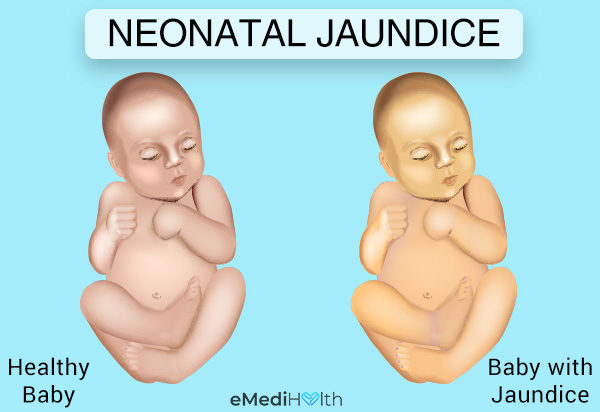
The skin and whites of the eyes start turning yellow…
Have you ever wondered how and why newborn babies develop jaundice that causes the skin and the whites of the eyes to turn yellow? Is treatment needed and what are the treatments?
The skin and whites of the eyes start turning yellow…
Have you ever wondered how and why newborn babies develop jaundice that causes the skin and the whites of the eyes to turn yellow? Is treatment needed and what are the treatments?
General The skin and whites of the eyes start turning yellow… Have you ever wondered how and why newborn babies develop jaundice that causes the skin and the whites of the eyes to turn yellow? Is treatment needed and what are the treatments? Acknowledgements Special thanks to anonymous for creating this series on Neonatal Jaundice. Part1: Intoduction and Etiology Have you ever wondered why most infants develop transient jaundice? What are the reasons and the treatments? It is benign and self-limiting due to elevation of unconjugated (fat-liking) bilirubin (a yellow substance in blood) concentration during the first week of the newborn. This is called physiological jaundice/neonatal jaundice. Physiological jaundice occurs 24-36hours after birth and can last about 7-10days for term(37-42weeks) and 2 weeks for preterm(<37weeks) infants. Neonatal jaundice is characterized by yellowish discoloration of the skin, conjunctiva and the sclera from elevated serum or plasma bilirubin in the newborn. Etiology: Unconjugated hyperbilirubinemia (excessive fat-soluble bilirubin presence in blood) occurs because of increased production of bilirubin and a decreased in bilirubin clearance. There are 3 main mechanisms in newborns that contribute to physiological jaundice. (Discussed in next part) Liver does the job of converting these fat-soluble bilirubin to be water-soluble(conjugation), and intestinal bacteria further metabolize them to be water soluble so that they can be excreted. Tho some of the bacteria reconvert back them into unconjugated form, and are then reabsorbed into the bloodstream and liver, thus increasing the bilirubin pool. Images Part 2: Etiology and treatment In part 1 we discussed about the basic etiology of neonatal jaundice. Let’s look deep into that and discuss why newborns can easily develop it (3 main mechanism) and what are the treatments. The life span of fetal erythrocytes(red blood cell) is short (60 to 90 days as compared to adult RBC lifespan of 120 days), rendering the high rate of metabolism of fetal haemoglobin, increasing overall bilirubin concentration in blood. After birth, liver enzyme such as glucuronosyltransferase acts to conjugate the resulting bilirubin for excretion. However the enzyme is downregulated because before childbirth, the bilirubin have to stay in unconjugated form to pass through the placenta to be excreted by the mother. Infant’s intestinal activity is low because excretion can be done through the placenta while in the mother’s womb. This causes more unconjugated bilirubin in the intestine to be easily reabsorbed into the bloodstream and to the liver. Treatment: Phototherapy Most babies with jaundice don’t usually need treatment and the condition will get better within 10-14 days. Phototherapy is a treatment with a special type of light to lower the level of bilirubin in the blood through a process called photo-oxidation. This causes the bilirubin to be more water-soluble, so that they can be easily excreted. Images Keywords Benign: Benign in medical, refers to a condition, tumour, or growth that is not cancerous. Conjunctiva: The conjunctiva is a mucous membrane that covers the surface of the eyeball and posterior aspect of the eyelid that functions to protect the eye and allow the eyelids to move smoothly over the eye ball. Sclera: The sclera, or white of the eye, is a protective covering that wraps over most of the eyeball. It extends from the cornea in the front to the optic nerve in the back. Haemoglobin: Haemoglobin (Hb) is a protein found in the red blood cells that carries oxygen in your body and gives blood its red colour. Haemoglobin levels vary from person to person. Men usually have higher levels than women. Glucuronosyltransferase: Glucuronyl transferase is a liver enzyme. It changes bilirubin into a form that can be removed from the body through the bile. It also changes some hormones, medicines, and toxins into non-harmful products. Placenta: The placenta is an organ that develops in your uterus during pregnancy. This structure provides oxygen and nutrients to your growing baby and removes waste products from your baby’s blood. Photo-Oxidation: Oxidation caused by the action of light. Photo-oxidation adds oxygen to the bilirubin so it dissolves easily in water. References Part 1 https://www.sciencedirect.com/topics/medicine-and-dentistry/conjunctiva https://my.clevelandclinic.org/health/body/22088-sclera https://www.ncbi.nlm.nih.gov/books/NBK310577/ Part 2 https://medlineplus.gov/ency/article/002370.htm https://www.mayoclinic.org/healthy-lifestyle/pregnancy-week-by-week/in-depth/placenta/art-20044425 https://www.nhs.uk/conditions/jaundice-newborn/treatment/Artificial Intelligence
Will AI take over the world?
What is all the “hype” about AI? There is no doubt that the development of AI has changed people’s lifestyle drastically over the years. What do you know about it?
Will AI take over the world?
What is all the “hype” about AI? There is no doubt that the development of AI has changed people’s lifestyle drastically over the years. What do you know about it?
General Will AI take over the world? What is all the “hype” about AI? There is no doubt that the development of AI has changed people’s lifestyle drastically over the years. What do you know about it? Acknowledgements Special thanks to Yuan Qi for creating this series on Artificial Intelligence. Part 1: Introduction Have you ever wondered what is Artificial Intelligence (AI)? What can it do and how does it affect our lifestyles and the future of humanity? Most people will immediately think of an apocalyptic event where robots take over of Earth, wiping the insignificant human race off the surface of Earth. Deep Blue, an AI developed by IBM won a chess game against the World Champion in Chess! How is that possible? Chess is a game that’s beyond traditional programming because it simply has too many possible combinations of move. The traditional computer is a machine that follows exactly what it is instructed. The computer couldn’t think or better, can’t think. How is it possible that a computer like Deep Blue is better than human at chess? This is all due to a completely new paradigm that revolutionized the way we teach computers. Part 2: From Top-Down to Bottom-Up Have you ever wondered how computers learn? Conventionally, we teach computer a set of rules. ie. if I want a computer to check if a number x is greater than 0, we tell it: If x>0, return True From a simple task like this to operating a server with billions of user, it’s still using the same fundamental principle of teaching: the top-down approach. By going from the problem (top) to the solution (down), we split one problem into smaller problems that can be solved using simple logics. How can we teach a computer for it to recognise hand-written digits? How do we learn that when we were young? Firstly, our parents reads the names of different numbers for us repeatedly. If we guess it correctly, we get a cookie. Otherwise, we get a punishment. asian cries This is the fundamental principle behind the new way of teaching computers, by reinforcing the wanted outcome using mathematical tools, allowing the computer to create its own rules in order to not be “punished”. Familiar enough? Yes, that’s how we learn as well! This method is generally known as the bottom-up approach or Machine Learning. How can math learn rules? STAY TUNED Images Keywords Machine Learning: Machine learning (ML) is a type of artificial intelligence (AI) that allows software applications to become more accurate at predicting outcomes without being explicitly programmed to do so. Machine learning algorithms use historical data as input to predict new output values. References Part 1 https://en.wikipedia.org/wiki/Deep_Blue_versus_Garry_Kasparov Part 2 https://www.techtarget.com/searchenterpriseai/definition/machine-learning-ML https://medium.com/@jarrian.mclean/top-down-vs-bottom-up-design-c5e82d48f37Aurora
Nature’s most beautiful light show
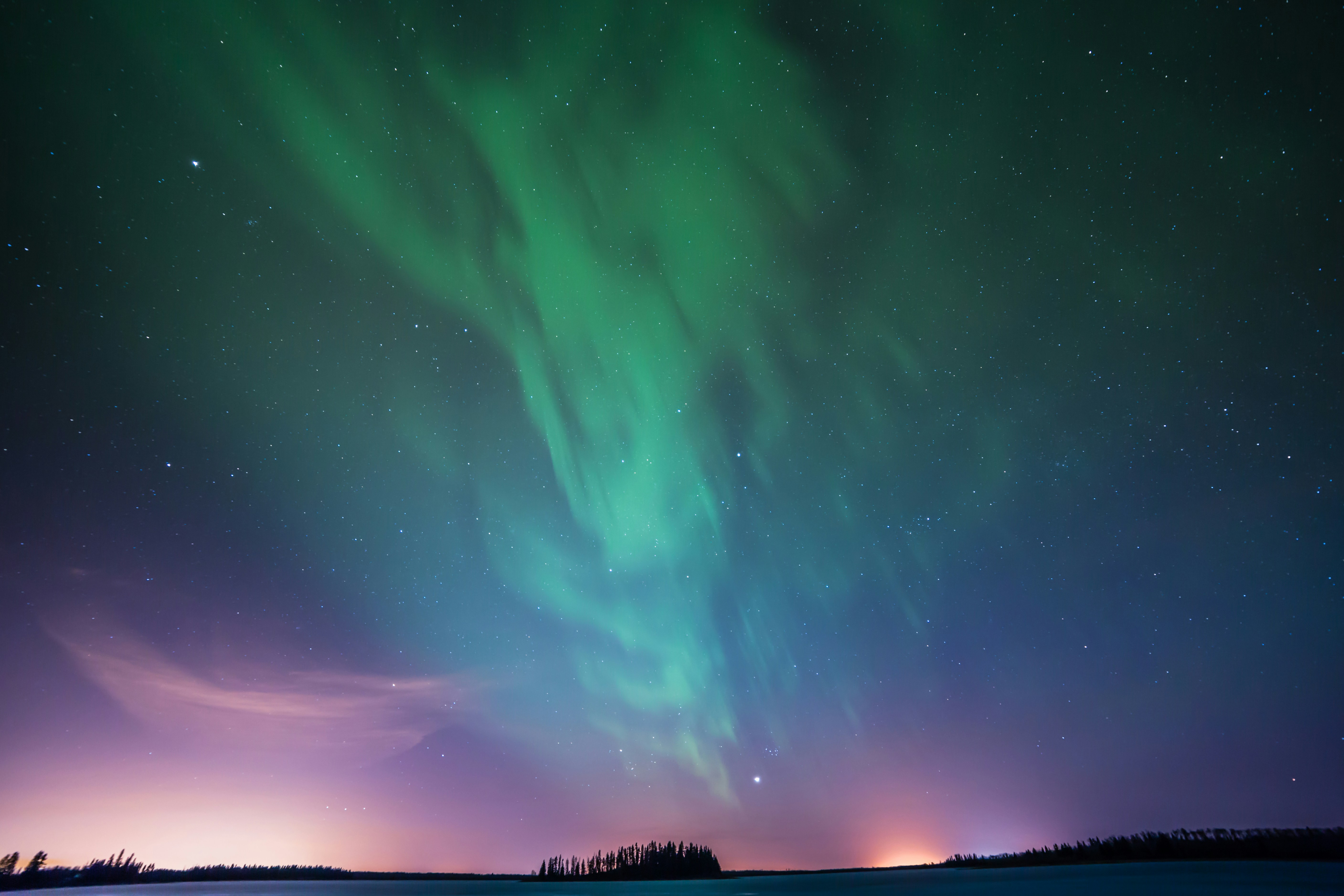
Have you ever wondered how these beautiful auroras, also known as the Northern Lights, are formed? Why do they occur mainly near Earth’s polar regions?
Nature’s most beautiful light show
Have you ever wondered how these beautiful auroras, also known as the Northern Lights, are formed? Why do they occur mainly near Earth’s polar regions?
Nature Nature’s most beautiful light show Have you ever wondered how these beautiful auroras, also known as the Northern Lights, are formed? Why do they occur mainly near Earth’s polar regions? The answer brings us all the way back to the Sun. Contrary to what we often imagine, the Sun is not simply a giant ball of fire. Instead, it is made up of an extremely hot state of matter known as plasma, where electrons and atomic nuclei move freely around one another. The Sun’s plasma is constantly shaped by its powerful magnetic field. Occasionally, some of this plasma escapes the Sun, releasing streams of charged particles into space. This continuous flow of charged particles is known as the solar wind. When the solar wind reaches Earth, most of these charged particles are deflected by Earth’s magnetic field. However, some of them become trapped and are guided along the magnetic field lines toward the North and South Poles. As these particles enter Earth’s upper atmosphere, they collide with gases such as oxygen and nitrogen. These collisions transfer energy to the atmospheric gases, causing them to glow and emit light. The result is the breathtaking display we know as an aurora. The colors of the aurora depend on which gases are involved in the collisions and the altitude at which they occur. Oxygen can produce green or red auroras, while nitrogen can produce blue or purple hues. Different interactions release different wavelengths of light, creating the spectacular variety of colors we see dancing across the night sky. In a world full of sunsets, be the aurora. Keywords Plasma: Plasma is superheated matter – so hot that the electrons are ripped away from the atoms forming an ionized gas. It comprises over 99% of the visible universe. Plasma is often called “the fourth state of matter,” along with solid, liquid and gas. Just as a liquid will boil, changing into a gas when energy is added, heating a gas will form a plasma. Ionosphere: The Ionosphere is part of Earth’s upper atmosphere, between 80 and about 600 km where Extreme UltraViolet (EUV) and x-ray solar radiation ionizes the atoms and molecules thus creating a layer of electrons. the ionosphere is important because it reflects and modifies radio waves used for communication and navigation. Wavelength: Wavelength is the distance between identical points (adjacent crests) in the adjacent cycles of a waveform signal propagated in space or along a wire. Wavelength is inversely related to frequency, which refers to the number of wave cycles per second. The higher the frequency of the signal, the shorter the wavelength. Images References Photo by Serey Kim on Unsplash https://www.psfc.mit.edu/vision/what_is_plasma https://www.swpc.noaa.gov/phenomena/ionosphere https://www.rmg.co.uk/stories/topics/what-causes-northern-lights-aurora-borealis-explained https://www.youtube.com/watch?v=OZ5idaNCIgASpecial Relativity Part 4: Beyond Light Speed
Let’s try going faster
Have you ever wondered, in this vast universe, whether anything can travel faster than the speed of light? In Part 1, we discussed that nothing can travel faster than light. So the universe’s ultimate speed limit is the speed of light… right? Maybe not.
Let’s try going faster
Have you ever wondered, in this vast universe, whether anything can travel faster than the speed of light? In Part 1, we discussed that nothing can travel faster than light. So the universe’s ultimate speed limit is the speed of light… right? Maybe not.
Physics Let’s try going faster Have you ever wondered, in this vast universe, whether anything can travel faster than the speed of light? In Part 1, we discussed that nothing can travel faster than light. So the universe’s ultimate speed limit is the speed of light… right? Maybe not. Two of the most intriguing candidates are the expansion of the universe itself and a hypothetical particle known as the tachyon. For now, we will put aside ideas such as teleportation and quantum entanglement, since they do not involve anything physically travelling faster than light. We know that ever since the Big Bang, the universe has been expanding. Surprisingly, this expansion is not slowing down under gravity as scientists once expected. Instead, the expansion is accelerating. At sufficiently large distances, galaxies can appear to recede from us faster than the speed of light. This does not violate special relativity, however, because it is not the galaxies themselves moving through space faster than light — it is the space between us that is expanding. Another fascinating possibility is the tachyon, a hypothetical particle that would always travel faster than light. Unlike ordinary particles, which can never reach the speed of light, a tachyon could never slow down below it. However, no experimental evidence for tachyons has ever been found, and many physicists believe they do not exist. Why are tachyons so controversial? According to special relativity, faster-than-light travel could lead to violations of causality — situations where an effect is observed before its cause. In some reference frames, a faster-than-light signal could even appear to travel backward in time. Such paradoxes are one of the main reasons why faster-than-light particles remain highly speculative. So what do you think? Is the speed of light truly the universe’s ultimate speed limit, or are there still surprises waiting to be discovered? Keywords Teleportation: Teleportation is the hypothetical transfer of matter or energy from one point to another without traversing the physical space between them. It is a common subject in science fiction literature and in other popular culture. Quantum Entanglement: A phenomenon in which the quantum state of each particle of the group cannot be described independently of the state of the others, including when the particles are separated by a large distance. Measurements of physical properties such as position and spin performed on entangled particles can, in some cases, be found to be perfectly correlated. For example, if a pair of entangled particles is generated such that their total spin is known to be zero, and one particle is found to have clockwise spin on a first axis, then the spin of the other particle, measured on the same axis, is found to be counterclockwise. Big Bang: The Big Bang theory is the prevailing cosmological model explaining the existence of the universe from the earliest known periods. The model describes how the universe expanded from an initial state of high density and temperature, and offers a comprehensive explanation for a broad range of observed phenomena. Images References Photo by Casey Horner on Unsplash https://en.wikipedia.org/wiki/Expansion_of_the_universe https://www.britannica.com/science/tachyon https://en.wikipedia.org/wiki/Teleportation https://en.wikipedia.org/wiki/Quantum_entanglement https://en.wikipedia.org/wiki/Big_BangSpecial Relativity Part 3: Length Contraction
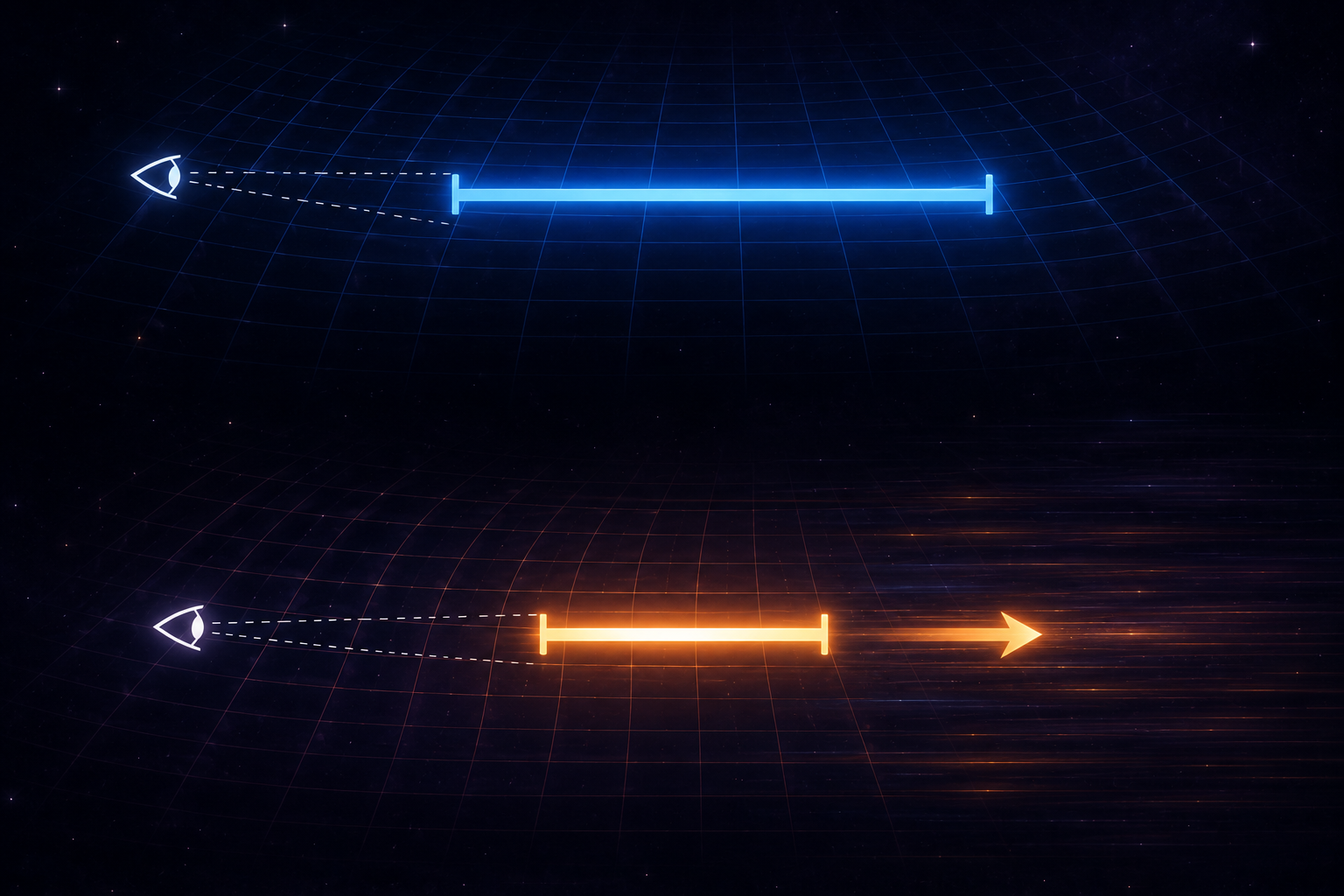
Moving makes you look shorter
Have you ever wondered if the length or size of an object can change according to its speed or the observer’s speed? Sounds ridiculous, right? Apparently, motion not only affects time, it also affects how lengths are measured.
Moving makes you look shorter
Have you ever wondered if the length or size of an object can change according to its speed or the observer’s speed? Sounds ridiculous, right? Apparently, motion not only affects time, it also affects how lengths are measured.
Physics Moving makes you look shorter Have you ever wondered if the length or size of an object can change according to its speed or the observer’s speed? Sounds ridiculous, right? Apparently, motion not only affects time, it also affects how lengths are measured. Similar to time dilation, for an observer in an inertial frame of reference, a moving object’s length appears to be** contracted along the direction of motion**. In other words, when you are moving relative to a stationary observer, the observer will perceive your length to be contracted. However, from your perspective, it is the observer’s length that appears contracted. It is not easy to measure the length of an object while the object is moving, or while you are moving. The front and back of the object must be measured at the same time from your perspective. You can think of it as taking a snapshot of a moving object. The amount by which lengths are contracted depends on how fast we are moving relative to each other. The closer we move to the speed of light, the more distorted our measurements of length become. To sum up both time dilation and length contraction, as your speed approaches the speed of light, time passes increasingly slowly relative to a stationary observer, while distances in the direction of motion become increasingly contracted. In the mathematical limit, the time experienced during a journey approaches zero, while the distance to the destination also approaches zero. While in theory, nothing with mass can ever achieve the speed of light! Images References https://www.youtube.com/watch?v=-NN_m2yKAAk https://www.cantorsparadise.com/length-contraction-in-einsteins-theory-of-relativity-7070ecd04e53Special Relativity Part 2: Time Dilation
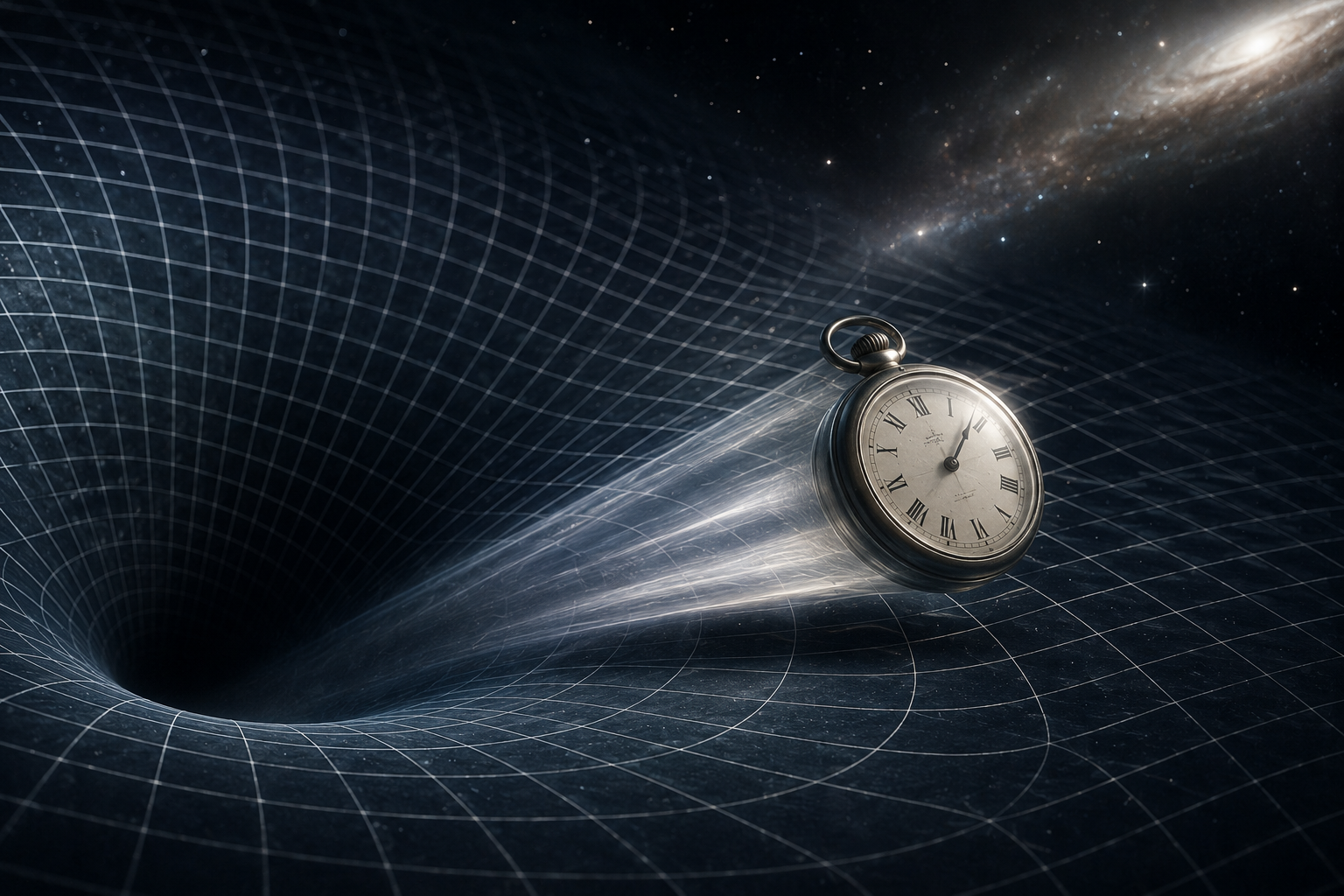
The faster you move through space, the slower you move through time.
Have you ever wondered is time travel really possible, like in the movies? Surprisingly, according to Albert Einstein and his theory of Special Relativity, travelling into the future may actually be possible. One of the strangest consequences of special relativity is something known as time dilation.
The faster you move through space, the slower you move through time.
Have you ever wondered is time travel really possible, like in the movies? Surprisingly, according to Albert Einstein and his theory of Special Relativity, travelling into the future may actually be possible. One of the strangest consequences of special relativity is something known as time dilation.
Physics The faster you move through space, the slower you move through time. Have you ever wondered is time travel really possible, like in the movies? Surprisingly, according to Albert Einstein and his theory of Special Relativity, travelling into the future may actually be possible. One of the strangest consequences of special relativity is something known as time dilation. Simply put, a moving clock is observed to tick more slowly compared to a stationary one. At the speeds we normally travel, this effect is far too small for us to notice. But near the speed of light, the effect becomes dramatic. To understand why, imagine a simple “light clock” made from two mirrors, A and B, with a pulse of light bouncing between them. If the mirrors are stationary, the light simply travels straight up and down between them. Since: time = distance / speed the time taken depends on the distance travelled divided by the speed of light. Now imagine the mirrors moving sideways at a constant speed. To a stationary observer, the light no longer travels straight vertically. Instead, it follows a diagonal path, covering a longer total distance. If we accept that the speed of light always remains constant: c = 299792458 m/s then the only thing that can increase is the time taken. The moving clock therefore appears to tick more slowly, we call this time dilation. And the effect becomes extraordinary near the speed of light. For more context: Imagine traveling away from Earth at 99.94% the speed of light for 5 years, then spending another 5 years returning home. By the time you arrive back on Earth, around 29 years would have passed for everyone else — while you yourself would have aged only 10 years. In a sense, you would have travelled into the future! Images References https://en.wikipedia.org/wiki/Inertial_frame_of_reference https://www.youtube.com/watch?v=-O8lBIcHre0Special Relativity Part 1: Nothing Outruns Light
The universe’s speed limit
Have you ever wondered what inspired Albert Einstein to develop one of the most revolutionary theories in physics? In this series, we will explore the foundations of Special Relativity — and everything begins with one fundamental thing: light.
The universe’s speed limit
Have you ever wondered what inspired Albert Einstein to develop one of the most revolutionary theories in physics? In this series, we will explore the foundations of Special Relativity — and everything begins with one fundamental thing: light.
Physics The universe’s speed limit Have you ever wondered what inspired Albert Einstein to develop one of the most revolutionary theories in physics? In this series, we will explore the foundations of Special Relativity — and everything begins with one fundamental thing: light. What is the fastest thing possible in the universe? Is there a true maximum speed that nothing can exceed? Light travels at approximately 299792458 m/s , denoted by the constant c. It is not infinite, but incredibly fast — so fast that nothing with mass can travel faster. At first glance, this may not seem strange. But things get weird when you considered that speed, is relative. Let’s look at an example. Imagine you are walking inside a moving train in the same direction the train is traveling. Suppose your walking speed is V, while the train moves at speed W. So what is your total speed? The answer depends on the observer. Relative to other passengers on the train, your speed is simply V. But to someone standing outside the train, your speed would logically appear to be: Total speed = V + W This is how speeds normally work in everyday life. But now comes the strange part. Suppose you stand still inside the moving train and shine a flashlight forward in the same direction the train is moving. Common sense would suggest that an observer outside the train should measure the light moving at: c + W Yet this is not what happens. No matter how fast the train moves, every observer will still measure the speed of light as exactly c. The speed of light remains constant in every frame of reference. You can move toward light, away from it, or alongside it — light will always appear to travel at the same speed. This idea became one of the two fundamental postulates of Special Relativity, and it would completely change our understanding of space, time, and reality itself. Keywords Albert Einstein: Albert Einstein (14 March 1879 – 18 April 1955) was a German-born theoretical physicist best known for developing the theory of relativity. Einstein also made important contributions to quantum theory. His mass–energy equivalence formula E=mc^2, which arises from special relativity has been called “the world’s most famous equation”. Frame of Reference: A frame of reference in physics is an abstract coordinate system used by an observer to measure the position, velocity, and acceleration of objects. Images References Photo by CHUTTERSNAP on Unsplash https://en.wikipedia.org/wiki/Albert_Einstein https://en.wikipedia.org/wiki/Paradox https://www.desy.de/user/projects/Physics/Relativity/SpeedOfLight/speed_of_light.htmlPraying Mantis
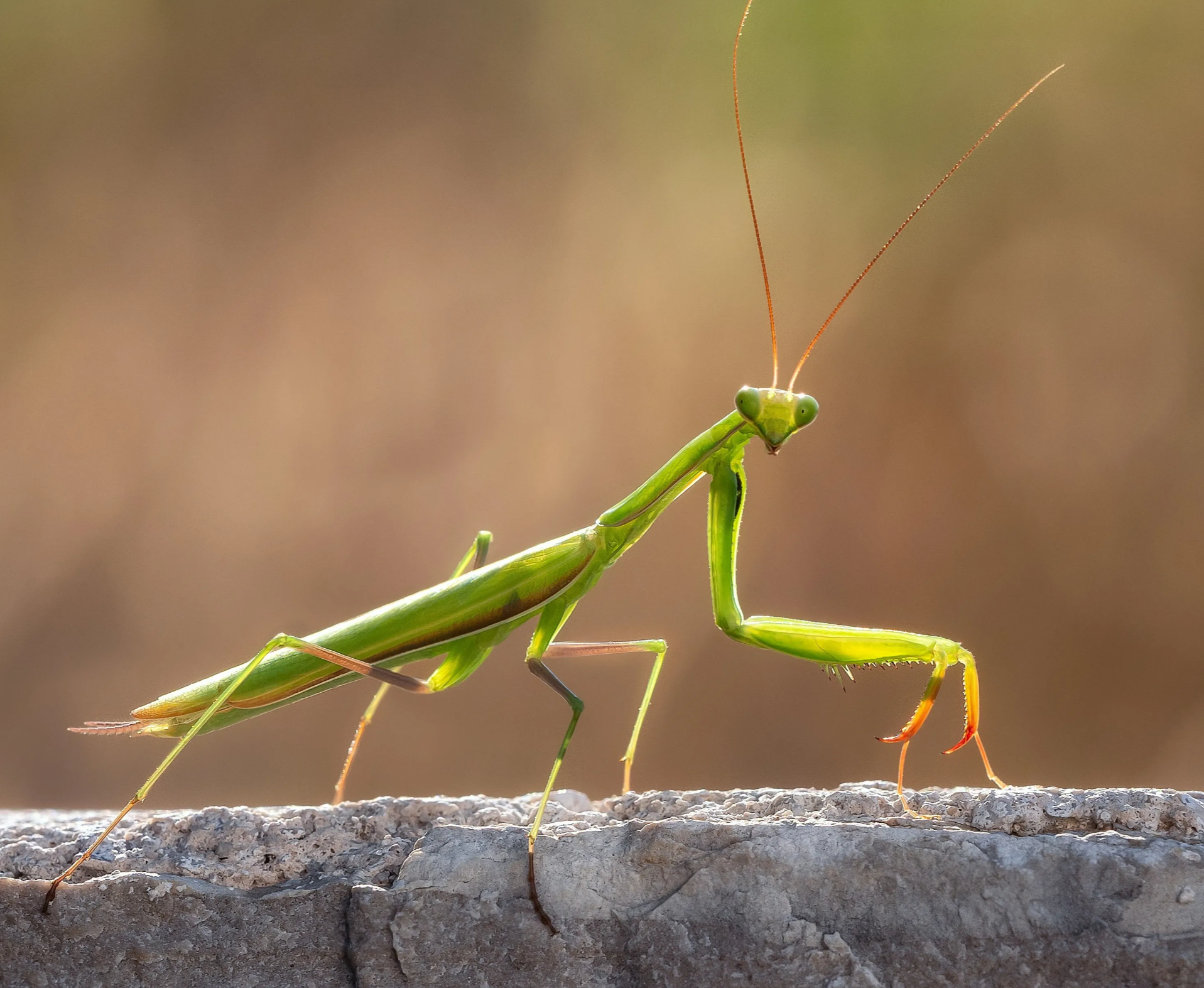
Love can kill
Have you ever wondered how these beautiful little insects reproduce and pass their genes on to the next generation? Enter one of nature’s most fascinating insects: the Praying Mantis.
Love can kill
Have you ever wondered how these beautiful little insects reproduce and pass their genes on to the next generation? Enter one of nature’s most fascinating insects: the Praying Mantis.
Nature Love can kill Have you ever wondered how these beautiful little insects reproduce and pass their genes on to the next generation? Enter one of nature’s most fascinating insects: the Praying Mantis. During mating season, male mantises become more active as they search for potential mates. But in their pursuit of love, they may lose more than just their hearts — for some, it becomes a suicide mission. After mating, the female mantis may bite off the male’s head and eventually consume the rest of his body. As horrifying as this sounds, the behavior may actually increase reproductive success. The nutrients gained from the male can help the female produce more eggs, increasing the chances of the male’s DNA being passed on to the next generation. In a strange way, the male literally sacrifices himself so that his offspring may survive. Though not all praying mantises cannibalize their mates, when they do, it is perhaps nature’s most terrifying version of “true love.” Love can break one's heart, but it can also consume all of you. Keywords Genes: A gene is the basic physical and functional unit of heredity. Genes are made up of DNA. Some genes act as instructions to make molecules called proteins. However, many genes do not code for proteins. In humans, genes vary in size from a few hundred DNA bases to more than 2 million bases. Cannibalism: Cannibalism is the act of consuming another individual of the same species as food. Cannibalism is a common ecological interaction in the animal kingdom and has been recorded in more than 1,500 species. DNA: DNA stands for deoxyribonucleic acid, which is the molecule inside cells that contains the genetic information responsible for the development and function of an organism. DNA molecules allow this information to be passed from one generation to the next. Images References Photo by William Warby on Unsplash https://medlineplus.gov/genetics/understanding/basics/gene/ https://www.cancer.gov/publications/dictionaries/genetics-dictionary/def/dna https://www.youtube.com/watch?v=Os3OBJSlpUcBlue Sky
Above us is a blue illusion
Have you ever wondered why the sky appears so bright and blue during the day, while in contrast, the outer space beyond us looks like a dark void?
Above us is a blue illusion
Have you ever wondered why the sky appears so bright and blue during the day, while in contrast, the outer space beyond us looks like a dark void?
Nature Above us is a blue illusion Have you ever wondered why the sky appears so bright and blue during the day, while in contrast, the outer space beyond us looks like a dark void? The answer lies in something Earth has that outer space mostly lacks: an atmosphere. Earth’s atmosphere is filled with tiny molecules and particles. When sunlight passes through the atmosphere, the light scatters in different directions before eventually reaching our eyes. In outer space, however, there are almost no particles to scatter the light, so space remains dark even when the Sun is shining. But why does the sky specifically appear blue? White sunlight is actually made up of many different colors — the colors of the rainbow. Each color has a different wavelength within the Electromagnetic Radiation spectrum. Red light has the longest wavelength, while blue and violet have much shorter wavelengths. When sunlight enters Earth’s atmosphere, shorter wavelengths like blue and violet scatter much more easily in all directions while the longer wavelengths pass through. Our eyes are also more sensitive to blue light than violet, which is why the sky appears blue to us. 🏞🌏 Keywords Atmosphere: A layer of gas or layers of gases that envelope a planet, and is held in place by the gravity of the planetary body. A planet retains an atmosphere when the gravity is great and the temperature of the atmosphere is low。 Classical Wave Theory: The intensity of the light determines the amplitude of the wave, and so a greater light intensity should cause the electrons on the metal to oscillate more violently and to be ejected with a greater kinetic energy. Wavelength: Wavelength is the distance between identical points (adjacent crests) in the adjacent cycles of a waveform signal propagated in space or along a wire. Wavelength is inversely related to frequency, which refers to the number of wave cycles per second. The higher the frequency of the signal, the shorter the wavelength. Electromagnetic Radiation: Electromagnetic (EM) radiation is a form of energy that is all around us and takes many forms, such as radio waves, microwaves, infrared-radiation, ultraviolet-radiation, X-rays and gamma rays. Sunlight is also a form of EM energy, but visible light is only a small portion of the EM spectrum, which contains a broad range of electromagnetic wavelengths. Images References https://en.wikipedia.org/wiki/Atmosphere https://www.techtarget.com/searchnetworking/definition/wavelength http://vergil.chemistry.gatech.edu/notes/quantrev/node4.html https://www.livescience.com/38169-electromagnetism.html https://spaceplace.nasa.gov/blue-sky/enSchrödinger's Cat
Curiosity kills the cat
Have you ever wondered how curiosity can actually kill a cat? It’s not just a saying—it’s also tied to one of the most famous thought experiments: Schrödinger’s Cat, proposed by physicist Erwin Schrödinger.
Curiosity kills the cat
Have you ever wondered how curiosity can actually kill a cat? It’s not just a saying—it’s also tied to one of the most famous thought experiments: Schrödinger’s Cat, proposed by physicist Erwin Schrödinger.
Physics Curiosity kills the cat Have you ever wondered how curiosity can actually kill a cat? It’s not just a saying—it’s also tied to one of the most famous thought experiments: Schrödinger’s Cat, proposed by physicist Erwin Schrödinger. This thought experiment describes a hypothetical cat placed inside a sealed box containing a radioactive substance, a detector, and a flask of poisonous gas. If the radioactive atoms decay, the detector triggers a hammer that breaks the flask, releasing the gas and killing the cat. Because radioactive decay is probabilistic, there is a chance that the atoms decay and a chance that they do not. Until the box is opened, we cannot know the outcome. According to certain interpretations of quantum mechanics, the system can be described as a superposition of states—meaning the cat is both dead and alive at the same time, at least in theory. This idea is known as Quantum Superposition. However, once the box is opened, the superposition appears to collapse, and we observe the cat as either dead or alive — not both. Schrödinger proposed this paradox to highlight how strange quantum mechanics becomes when applied to everyday objects. It raises deep questions about observation, measurement, and reality itself. Curiosity makes us open the box, but it may also kill the cat! Keywords Erwin Schrödinger: Erwin Rudolf Josef Alexander Schrödinger (12 August 1887 – 4 January 1961), sometimes written as Erwin Schrodinger or Erwin Schroedinger, was a Nobel Prize-winning Austrian-Irish physicist who developed a number of fundamental results in quantum theory. In popular culture, he is most known for his “Schrödinger’s cat” thought experiment. Quantum Superposition: Quantum superposition is a fundamental principle of quantum mechanics. It states that, much like waves in classical physics, any two (or more) quantum states can be added together (“superposed”) and the result will be another valid quantum state; and conversely, that every quantum state can be represented as a sum of two or more other distinct states. Decay: Radioactive decay is the process by which an unstable atomic nucleus loses energy by radiation. A material containing unstable nuclei is considered radioactive. Quantum Mechanics: Quantum mechanics is a fundamental theory in physics that provides a description of the physical properties of nature at the scale of atoms and subatomic particles. It is the foundation of all quantum physics including quantum chemistry, quantum field theory, quantum technology, and quantum information science. Images References https://en.wikipedia.org/wiki/Erwin_Schrödinger https://en.wikipedia.org/wiki/Quantum_superposition https://en.wikipedia.org/wiki/Schrödinger%27s_cat https://www.youtube.com/watch?v=UjaAxUO6-Uw https://en.wikipedia.org/wiki/Radioactive_decay https://en.wikipedia.org/wiki/Quantum_mechanics